


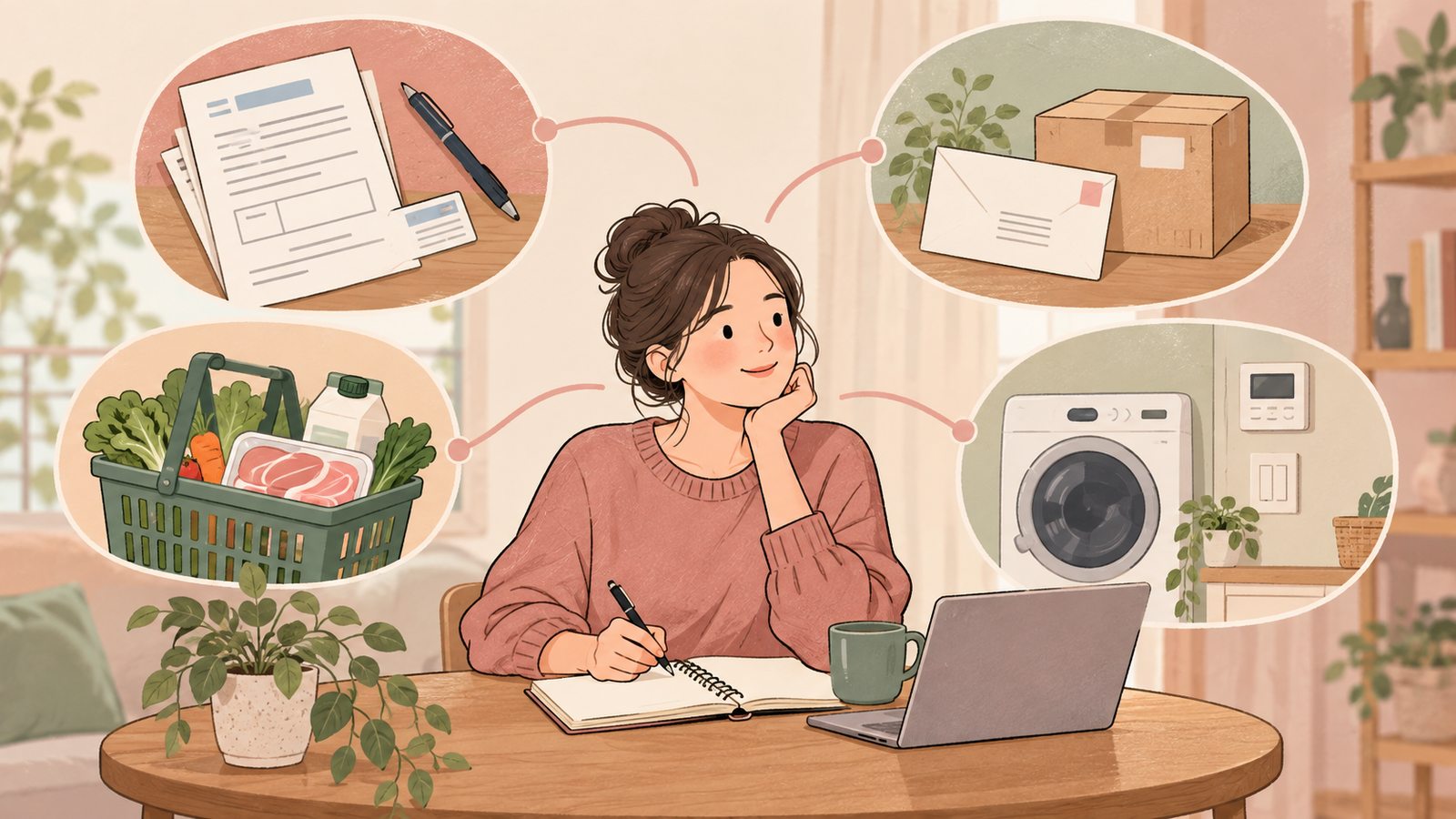
Living in Japan and unsure where to start with everyday tasks? Keep your exact address, the name of the organization that sent a notice, and its deadline in front of you. Then identify whether the task belongs to your city or ward, a service provider, your building manager, or your employer. The guides below help you read common Japanese terms and take the next practical step.
This is a starting page for English-speaking residents. It links to focused guides rather than trying to make one checklist fit every household, municipality and workplace. If a letter has a deadline or a payment request, read the actual notice and check the sender’s current instructions.
Start with the task, not a long vocabulary list
When a Japanese form or machine is unfamiliar, take three steps. First, find the heading and who issued it. Second, look for a date, a required action, and the place or method for responding. Third, ask the issuer to explain anything that affects your money, identity, home or work before you submit it. A translated word helps, but the instructions for your particular case matter more.
| What you need to do | Where to begin | What to keep handy |
|---|---|---|
| Update an address or get a certificate | City or ward office | Actual address, identification, document requested |
| Send or receive a parcel | Postal or delivery service | Notice, tracking number, recipient details |
| Handle an apartment notice | Landlord or property manager | Lease, notice, photos if relevant |
| Check pay or insurance at work | Employer or relevant public office | Offer, written conditions, payslip or notice |
City hall and documents: know what the recipient needs
Moving? Our address-change checklist separates a move within one municipality from a move to another. It also points you to the practical tasks that accompany a move. For a copy of your resident record, the jūminhyō (住民票) guide explains what details to confirm with the organization requesting it. If you need a seal registration certificate, see our inkan certificate guide; it is a separate document.
A tax or insurance envelope should be handled as its own task. Our guides to resident tax notices, National Health Insurance payment notices, and National Pension payment slips help you find the amount, period and deadline printed on each. Do not assume two similar-looking slips cover the same period.
Mail and deliveries: read the notice before acting
A missed-delivery slip may offer several redelivery routes. Our Japan Post redelivery guide helps you find the tracking number and requested method. For ordinary counter services, begin with how to use a post office. If your building has a parcel locker, the parcel locker guide covers the usual notice and collection flow.
After a move, postal forwarding is separate from updating your registered address and notifying important senders. Keep a list of your bank, employer, phone provider and other services so you can update them directly.
Shopping and food: find the few labels you need
The grocery shopping guide covers a supermarket trip from basket to packing area. From there you can open focused guides for tax and discount prices, food dates and storage, and ingredients and allergens.
If you avoid an ingredient for an allergy, read the current product package carefully and contact the manufacturer if its information is unclear. A translated product name or photo is not a reliable substitute for the actual ingredient and allergen information.
At home: appliances, laundry and building notices
Start with the air-conditioner remote, washing-machine buttons, or microwave controls if the labels on your equipment are unfamiliar. The machine’s own manual and safety markings take priority when a model differs from the examples.
For household products, our laundry detergent guide and cleaner warning-label guide explain what to look for before use. Waste categories and collection days are local, so use the garbage-sorting guide to find your municipality’s rules and your building’s collection point.
When a notice appears in the lobby or mailbox, check its date and what access or preparation it asks of you. Our water shutoff, fire inspection, drain cleaning, and gas safety inspection guides address four common examples. A gas provider’s periodic visit and a building management inspection may come from different senders, so check the issuer on the actual notice. Contact the management company if you cannot identify who issued the notice.
Work and housing: two deeper paths
For employment from the first job listing through the final documents, start with our Working in Japan guide.
For renting, our Japanese apartment guide connects the search, costs, move-in, repairs, renewal and move-out stages. For a new job, the new employee forms guide connects insurance, attendance, payslips and tax documents. These paths help you move from a general question to the specific document you are holding.
If you are exploring English teaching, the eikaiwa job comparison guide helps you ask about learners, lesson style, schedule and written conditions. You can also read about working at b Watashino Eikaiwa and check the current Lesson Partner listing for requirements.
A five-minute routine for unfamiliar notices
- Identify the sender and whether it concerns your home, work, a public office or a purchase.
- Circle the date, amount and action requested; check what period a payment covers.
- Use the relevant guide above to understand the labels, then compare with the current issuer instructions.
- Ask a specific question and keep the reply or confirmation, especially for money or deadlines.
- Save the document where you can find it again. One clear next step is enough to begin.
Life in Japan becomes easier to navigate when each notice has a place to go and a person to ask. Bookmark the guides you use often, and return to this page when a new task comes up.