
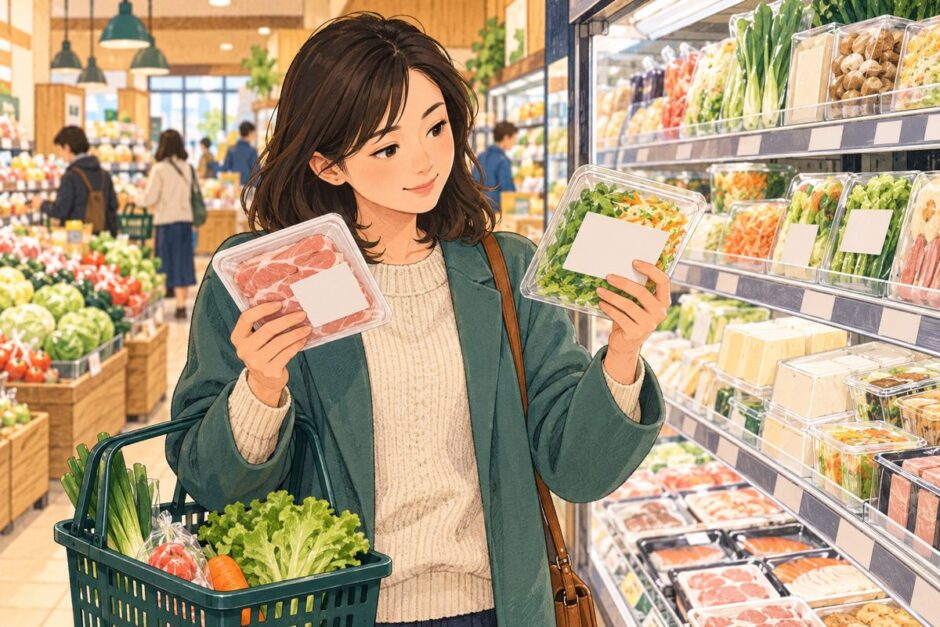

You are holding a Japanese bento or a packet of noodles and see 消費期限 or 賞味期限. They are different. 消費期限 is a use-by date for foods that spoil quickly; do not eat the food after it. 賞味期限 is a best-before date for expected quality and does not automatically mean the food becomes unsafe the next day. Both dates assume the package is unopened and stored as directed. Read the 保存方法 line before deciding whether you can take the food home or keep it for later. The Consumer Affairs Agency’s English food-labelling guide explains the distinction.
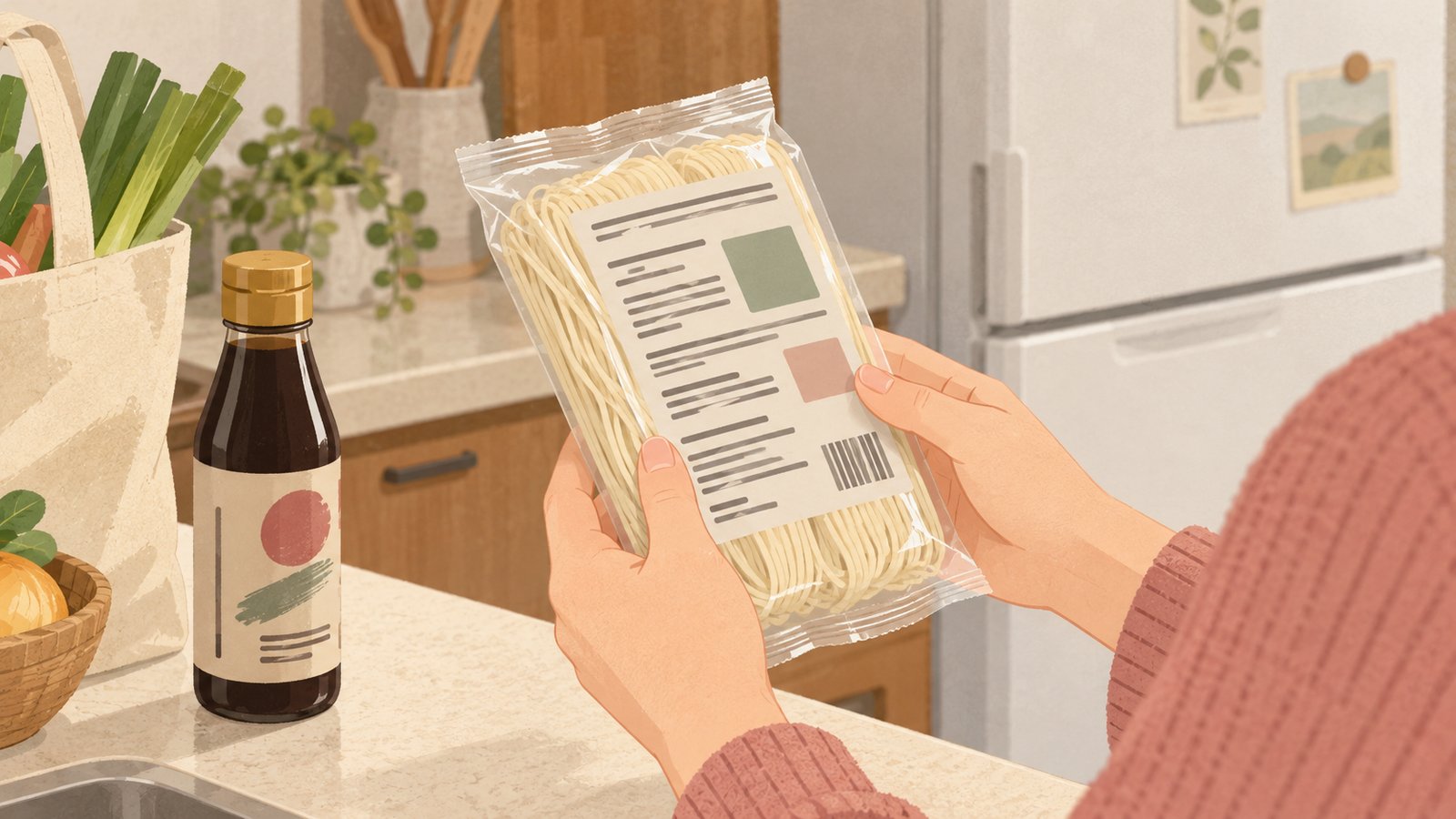
Japanese food-label words at a glance
| Japanese | Reading | Meaning | What to do |
|---|---|---|---|
| 消費期限 | shōhi kigen | Use-by date | For quickly perishable food; do not eat after the date |
| 賞味期限 | shōmi kigen | Best-before date | Quality date under stated storage conditions |
| 保存方法 | hozon hōhō | Storage method | Read together with the date |
| 要冷蔵 | yō reizō | Keep refrigerated | Take it home promptly and refrigerate as directed |
| 要冷凍 | yō reitō | Keep frozen | Maintain frozen storage as directed |
| 常温保存 | jōon hozon | Store at room temperature | Follow the package’s full conditions |
| 直射日光を避けて保存 | chokusha nikkō o sakete hozon | Store away from direct sunlight | Check other temperature or humidity instructions too |
| 開封後 | kaifūgo | After opening | Read separate instructions; the printed date no longer governs in the same way |
| お早めにお召し上がりください | ohayame ni omeshiagari kudasai | Consume promptly | Often appears in after-opening advice |
| 製造年月日 | seizō nengappi | Manufacturing date | Not the same as the use-by or best-before date |
Use-by versus best-before
消費期限 is used for food likely to deteriorate relatively quickly, such as many prepared meals and sandwiches. The date refers to safe consumption when the unopened food has been stored as instructed. Plan to eat it by the indicated date; do not treat smell or appearance as a reason to override a passed use-by date. Japan’s Ministry of Agriculture, Forestry and Fisheries explains both dates.
賞味期限 concerns the period of expected quality for foods that generally keep longer. Passing that date does not automatically make unopened food inedible, but its condition and storage still matter. The ministry’s date guide gives examples and emphasizes that the food must have been kept according to its label. When in doubt about a food’s condition, do not eat it.
Read the date in the right order
Japanese food labels commonly show year / month / day, for example 2026.10.05 for October 5, 2026. The Consumer Affairs Agency’s English guide illustrates both a four-digit year and an abbreviated year. Some longer-lasting products display only a year and month. Look at the printed label and the date wording together; do not assume a US-style month/day/year sequence.
A three-step check before buying or eating
- Find the type of date. Is it 消費期限 or 賞味期限? A discount sticker does not change the food’s printed date or storage instructions.
- Find the storage line. If it says 要冷蔵 or 要冷凍, consider the trip home and follow the stated temperature or handling instructions. The Consumer Affairs Agency’s food-labelling guide shows storage directions such as keeping a product at 10°C or below; the exact product label controls.
- Check whether it has been opened. The dates are for unopened products under the indicated storage conditions. After opening, follow any separate instructions and use the food promptly. The ministry’s guidance makes this point for both date types.
Typical situations
A discounted bento with 消費期限 today: Check its storage instructions and buy it only if you can store and eat it within the stated date. An unopened package of dry noodles with 賞味期限 next month: Follow its storage line; that printed date is about expected quality. An opened sauce with a future 賞味期限: Read its 開封後 instructions and do not rely on the unopened-package date alone.
Do not use a printed date as a substitute for checking allergies, ingredients or preparation instructions. For a serious allergy, check the current package carefully and contact the manufacturer or store if the information is unclear.
For help reading the appliance at home, see our Japanese refrigerator labels guide. If the package has a markdown sticker, our price and discount guide explains the reduction. Eggs have an additional raw-use consideration; see our egg carton label guide.
Short Japanese questions in the store
| Japanese | Reading | Meaning |
|---|---|---|
| 消費期限はどこに書いてありますか。 | Shōhi kigen wa doko ni kaite arimasu ka? | Where is the use-by date written? |
| これは冷蔵が必要ですか。 | Kore wa reizō ga hitsuyō desu ka? | Does this need refrigeration? |
| 開封後はどう保存しますか。 | Kaifūgo wa dō hozon shimasu ka? | How should I store it after opening? |
| この日付は賞味期限ですか。 | Kono hizuke wa shōmi kigen desu ka? | Is this date the best-before date? |
For the full supermarket routine, read our grocery shopping guide. If the package includes heating instructions, our Japanese microwave buttons guide helps you match the printed wattage and time to the machine.