
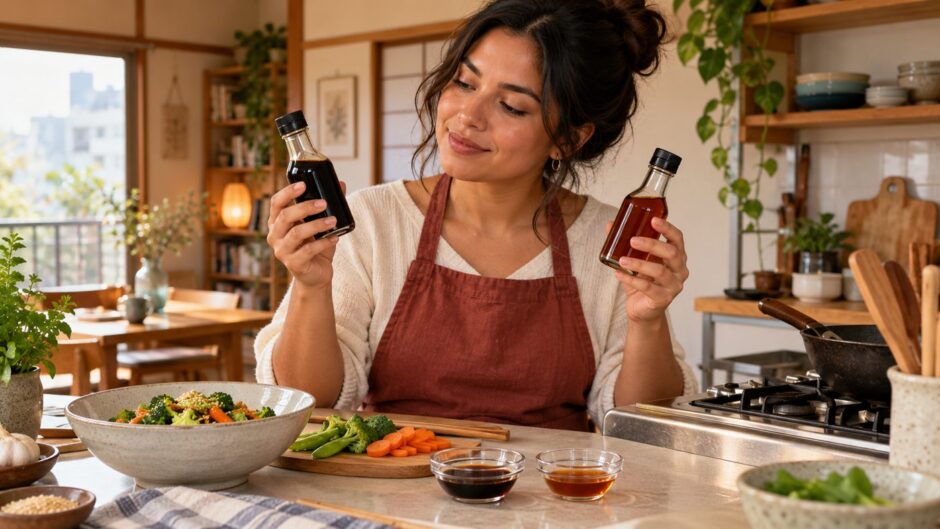

At the supermarket, you may see こいくち, うすくち and 減塩 on neighboring soy sauce bottles. If you want a general-purpose soy sauce, こいくち is a useful starting point. If a recipe calls for うすくち, that means a lighter color, not necessarily less salt: makers say it generally has more salt than こいくち. For a lower-salt product, look for 減塩 and compare the nutrition panel on the bottle you are buying.
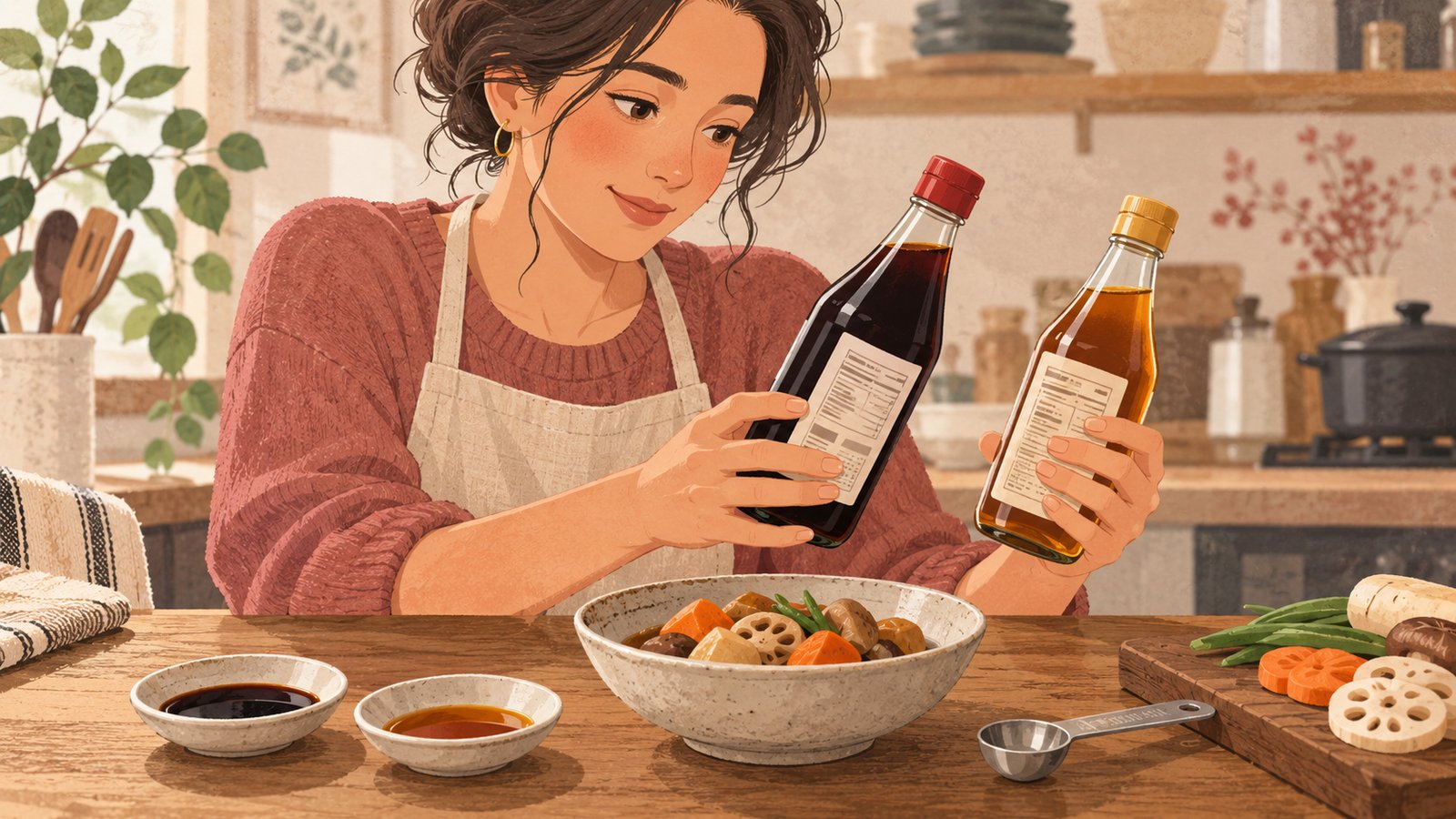
Japanese words on soy sauce bottles
| Japanese | Reading | Meaning in the aisle |
|---|---|---|
| しょうゆ / 醤油 | shōyu | Soy sauce |
| こいくち / 濃口 | koikuchi | Dark-colored, common soy sauce type |
| うすくち / 淡口 | usukuchi | Lighter-colored soy sauce type; not a low-sodium claim |
| 減塩 | genen | Reduced salt; check the product’s comparison basis and sodium-equivalent value |
| 塩分ひかえめ | enbun hikaeme | Less salt, according to the product claim; compare the actual label |
| だししょうゆ | dashi shōyu | Soy sauce seasoned with broth ingredients; not identical to plain soy sauce |
| 丸大豆 | marudaizu | Whole soybeans used as an ingredient; not an allergen-free claim |
| 食塩相当量 | shokuen sōtōryō | Salt equivalent on the nutrition panel; note whether the value is per 15 mL, 100 mL or another serving |
| 開栓後 | kaisen-go | After opening; read the storage directions that follow |
Which bottle should you pick?
- For a general kitchen bottle: start with こいくち if a recipe simply says “soy sauce.” The Japan Soy Sauce Association describes five standard types, including こいくち and うすくち.
- For a pale broth or a recipe that explicitly says うすくち: choose うすくち, and add it gradually to taste. Kikkoman explains that the pale color and gentler aroma generally come with somewhat higher salt content than こいくち.
- For a salt-conscious choice: look for 減塩, then compare 食塩相当量 using the same volume or serving. A “40% less” claim is a comparison against a specified reference product, not a promise of zero salt. A Kikkoman product page gives an example of the comparison.
- For allergies or dietary needs: inspect 原材料名 and アレルギー表示 on the exact bottle. A representative whole-soybean soy sauce listing includes both soy and wheat; other recipes, including dashi blends, differ. Do not infer ingredients from the front name alone.
After you open it
Check the package for 開栓後 and 保存方法. Storage and recommended use periods differ by container: some sealed, air-blocking bottles have a specified room-temperature period after opening, while ordinary bottles may have different directions. Follow your bottle’s label rather than a rule for another brand or package. This manufacturer’s sealed-bottle listing is one example of a product-specific direction.
Useful Japanese at the store
- これはうすくちしょうゆですか。 Kore wa usukuchi shōyu desu ka? — Is this light-colored soy sauce?
- 減塩しょうゆはどこですか。 Genen shōyu wa doko desu ka? — Where is the reduced-salt soy sauce?
- 小麦は入っていますか。 Komugi wa haitte imasu ka? — Does it contain wheat? For an allergy, verify the exact label as well.
For a meal using several seasonings, our mirin and cooking sake guide covers the other bottles often used in simmered dishes. The miso label guide explains when dashi has already been added to a tub.
For the broader package-reading process, see our Japanese allergen-label guide. Our supermarket price-tag guide helps compare bottle prices and unit prices. If this is your first grocery run in Japan, start with the full supermarket guide for the shopping flow and other useful labels.