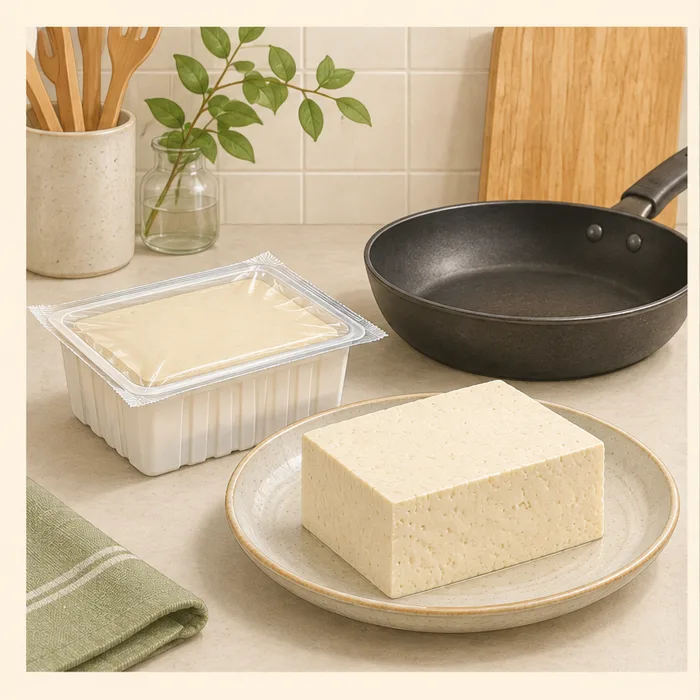

If your Japanese recipe says 豆腐の水切りをする, remove excess moisture from the tofu before using it. For pan-frying, start by pouring off any packing liquid and patting the surface dry. If the recipe specifies a longer drain or a particular method, follow that step before slicing or seasoning.
Read the recipe and package together
| What you see | What to do |
|---|---|
| 水気を拭き取る | Blot the surface with kitchen paper. |
| 水切りをする | Drain the tofu. Check the next line for a method and time. |
| 水切り不要 | The maker says that product can be used without a separate draining step. Check the rest of the recipe for any texture requirements. |
A sealed pack with little visible liquid can still contain soft tofu. For example, Sato no Yuki’s FAQ says its paper-pack tofu is packaged without added water around the block. The same maker specifically advertises a firmer product that can be cooked without draining. Look for wording on the pack you are holding.
Choose a method that suits the dish
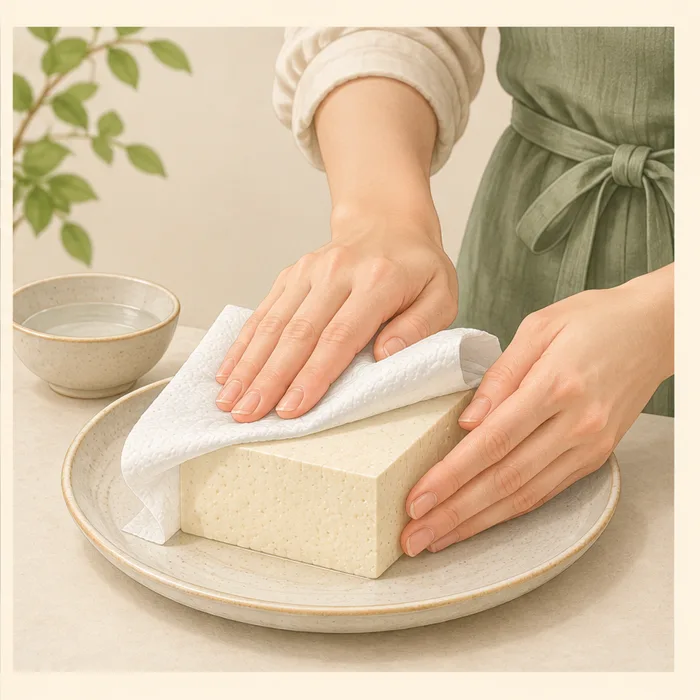
- Pan-frying or stir-frying. Blot the sides before the tofu goes near hot oil. If the recipe needs a firmer block, place firm tofu on a clean plate lined with kitchen paper and follow the recipe’s draining time. Replace soaked paper if needed.
- Soup or chilled tofu. Pour off the packing liquid, if present. Lift silken tofu with the edge of the serving spoon or slide it out onto a plate. Pressing a delicate block can break it.
- Mashed tofu mixtures. Follow the recipe’s draining step before mixing in seasonings, especially if it depends on a thick consistency.
Shopping for the right texture? Use our guide to 木綿, 絹ごし and 充填 tofu labels to choose a block for your recipe.