


For an English teaching interview demo, choose a small learner task, make room for the learner to speak, and show how you adjust. A polished grammar explanation alone does not demonstrate what happens when someone hesitates, asks a question or needs another example. The school’s brief comes first: use the assigned material, level and time limit if they give them to you.
This article focuses on three decisions you can make before and during a demo. For a full planning sequence and a sample five-minute lesson, see our demo lesson guide. A conversation school in Japan is often called an 英会話 (eikaiwa).
Tip 1: Choose one simple, useful teaching point
If the school lets you choose the topic, start with a task an adult learner could realistically complete in a short lesson. “Ask a colleague to change a meeting time” is easier to demonstrate than “learn all modal verbs.” You can still teach one useful phrase, but there should be a moment when the learner uses it for a purpose.
| Broad idea | Smaller demo task | What you can observe |
|---|---|---|
| Prepositions | Describe where an item is in a room | Can the learner give directions another person can follow? |
| Should and shouldn’t | Offer one piece of advice to a friend | Can the learner give a reason and respond to a follow-up? |
| Polite requests | Ask to move an appointment | Can the learner make a request and propose an alternative? |
The topic is not universally “easy” or “hard”: it depends on the learner and the time available. If the brief assigns a different subject, use that subject and narrow the outcome within it. Do not replace supplied materials with a personal favorite without asking.
Prepare one stretch and one simpler version
For an appointment task, the core exchange might be “Would Thursday work for you?” and “I can do Friday instead.” If the learner handles it readily, ask them to give a reason or suggest another option. If they struggle, show two possible times and ask them to choose one before speaking independently. Both responses show you are attending to the learner rather than reciting a fixed script.
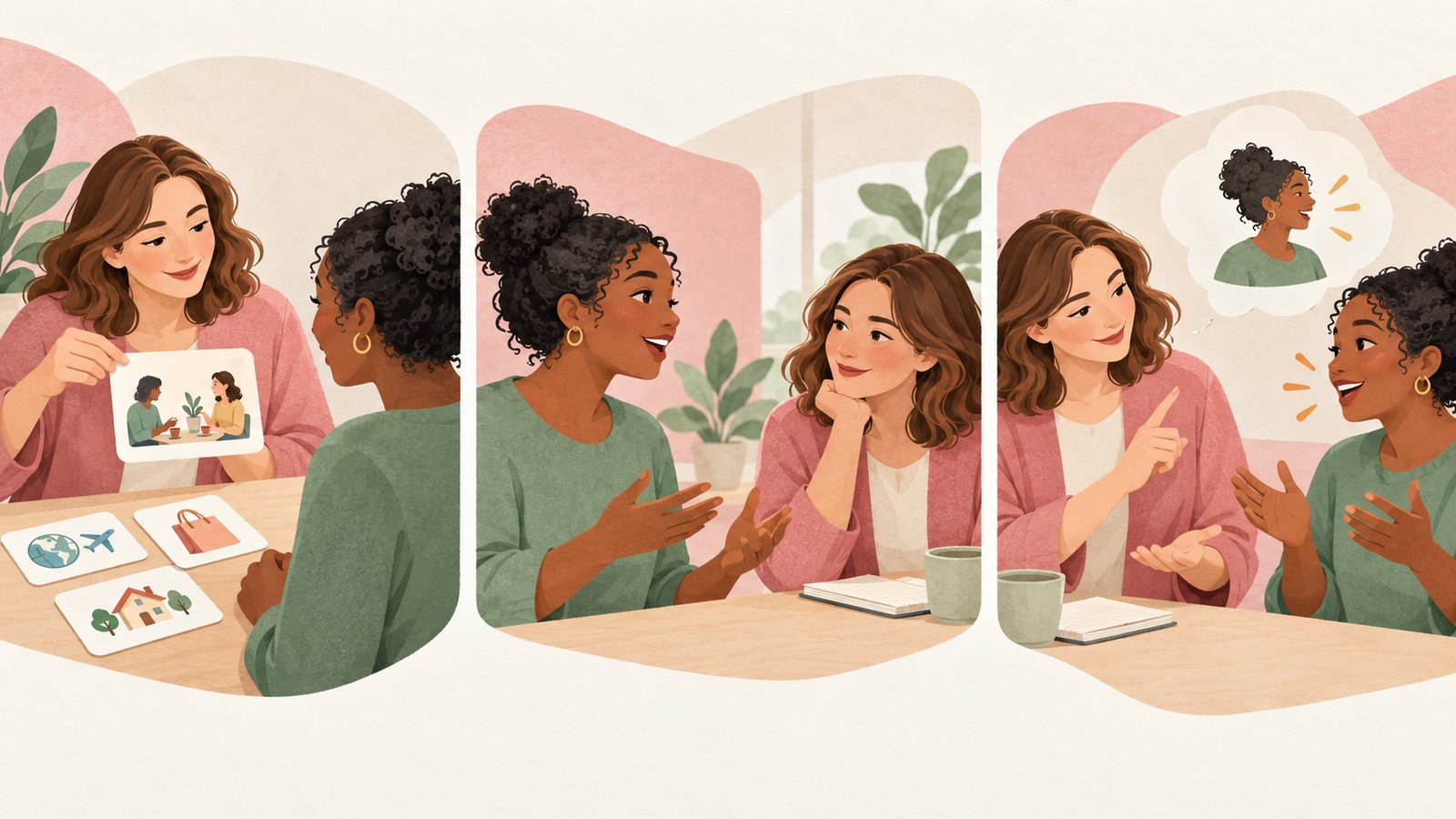
Tip 2: Rehearse your delivery, then listen
Practice your opening with a timer. Explain the situation and model the phrase briefly; then give the learner a prompt that requires more than yes or no. A short pause after your question is useful. It gives the learner time to think, and it gives you a chance to see what support they need.
For example, after modeling “Could we meet on Friday instead?”, you could say: “Our meeting is on Thursday, but you’re busy then. What could you ask me?” If the learner pauses, offer a choice: “Would Friday or Monday suit you?” Then return the question to them.
- Watch for understanding: Ask the learner to use the phrase in a new situation, rather than only asking “Do you understand?”
- Respond to what they say: Acknowledge a successful choice, then correct one point that will help the next attempt.
- Keep the learner involved: Avoid a long explanation that leaves no time to practice.
- Leave a closing minute: Let the learner retry and say what improved.
Confidence helps, but it need not look like an energetic performance. A calm, clear teacher who listens and makes the learner comfortable can show strong classroom judgment. Our guide to useful free talk in one-to-one lessons has more ways to turn conversation into learning.
Tip 3: Follow the school’s brief and explain your adjustments
Schools differ in how much freedom they give applicants. Some want a specific textbook page; others invite you to design your own mini lesson. If you receive a teaching model or supplied materials, work within them. If you think the learner needs a different example or more time to speak, make a small adjustment and explain it briefly afterward.
Suppose the interviewer, acting as a learner, appears confused by your example. You could say, “Let me try a more familiar situation,” then use a simpler prompt and invite another response. That is more useful than pressing through every item in your plan. If the interviewer changes the assigned level midway through, acknowledge the change and adapt the task rather than assuming it is a trick.
The older version of this article advised applicants never to “innovate.” That was too broad. A good demonstration can be creative when the brief allows it. The practical question is whether your activity helps this learner meet the stated goal within the time available.
One final rehearsal checklist
- Confirm the duration, learner profile, format and whether materials are assigned.
- Write one outcome: “By the end, the learner can…”
- Try the task aloud with another person and time the opening, practice and closing.
- Prepare a simpler prompt and a follow-up for a faster learner.
- Decide what evidence would show the learner improved, even in five minutes.
- Prepare one brief reflection on what you would do in the next lesson.
If you reach a later interview round with supplied materials, use our second-round demo lesson guide. You may also want to compare group, children’s and one-to-one teaching before applying.