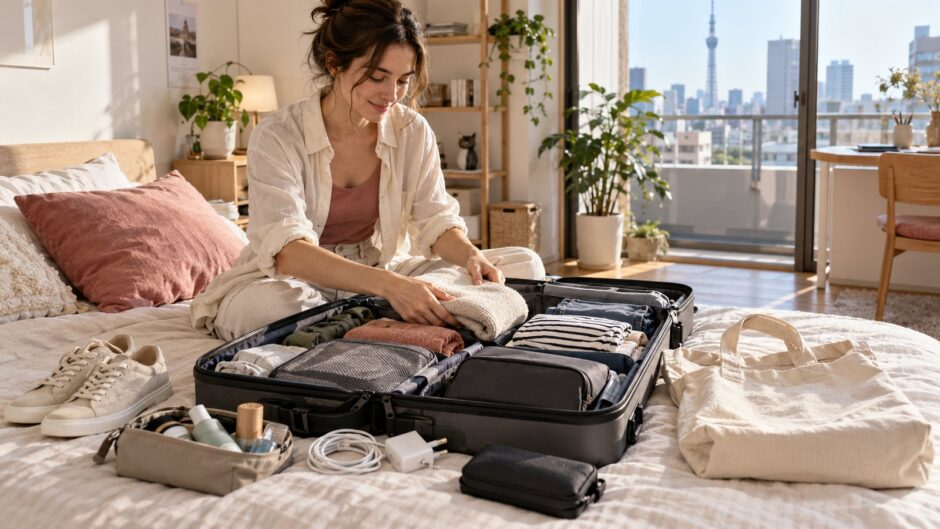

What should you bring when moving to Japan to teach English? Pack for your first days, your actual job and the items that are hard to replace in your size or preferred type. Leave bulky everyday supplies for after you know your new home. Before putting food or medicine in a suitcase, check Japan’s current import rules and your airline’s baggage rules.
The list below helps you sort decisions; it is not an immigration or customs checklist. Your employer, airline and the relevant Japanese authorities are the sources for requirements specific to your move.
1. Keep first-day essentials with you
Put the documents and items you need in transit in your hand luggage, subject to airline and security rules. Keep a separate accessible copy of important contact details in case your phone has no connection on arrival.
- Travel document and any documents specifically required for your entry and job, as instructed by the relevant authorities and employer.
- Address of your first accommodation, directions and your employer or host’s contact information.
- Phone, charging equipment and a payment method that you have checked for use abroad.
- Essential personal items for at least the first day, in case a checked bag is delayed.
- Prescription information and permitted medication, after checking the rules that apply to the exact product.
Check the name, date and format on documents you were told to bring. An old article cannot determine whether you personally need a diploma, certificate or other record at the border or for onboarding.
2. Pack for the work and season you know
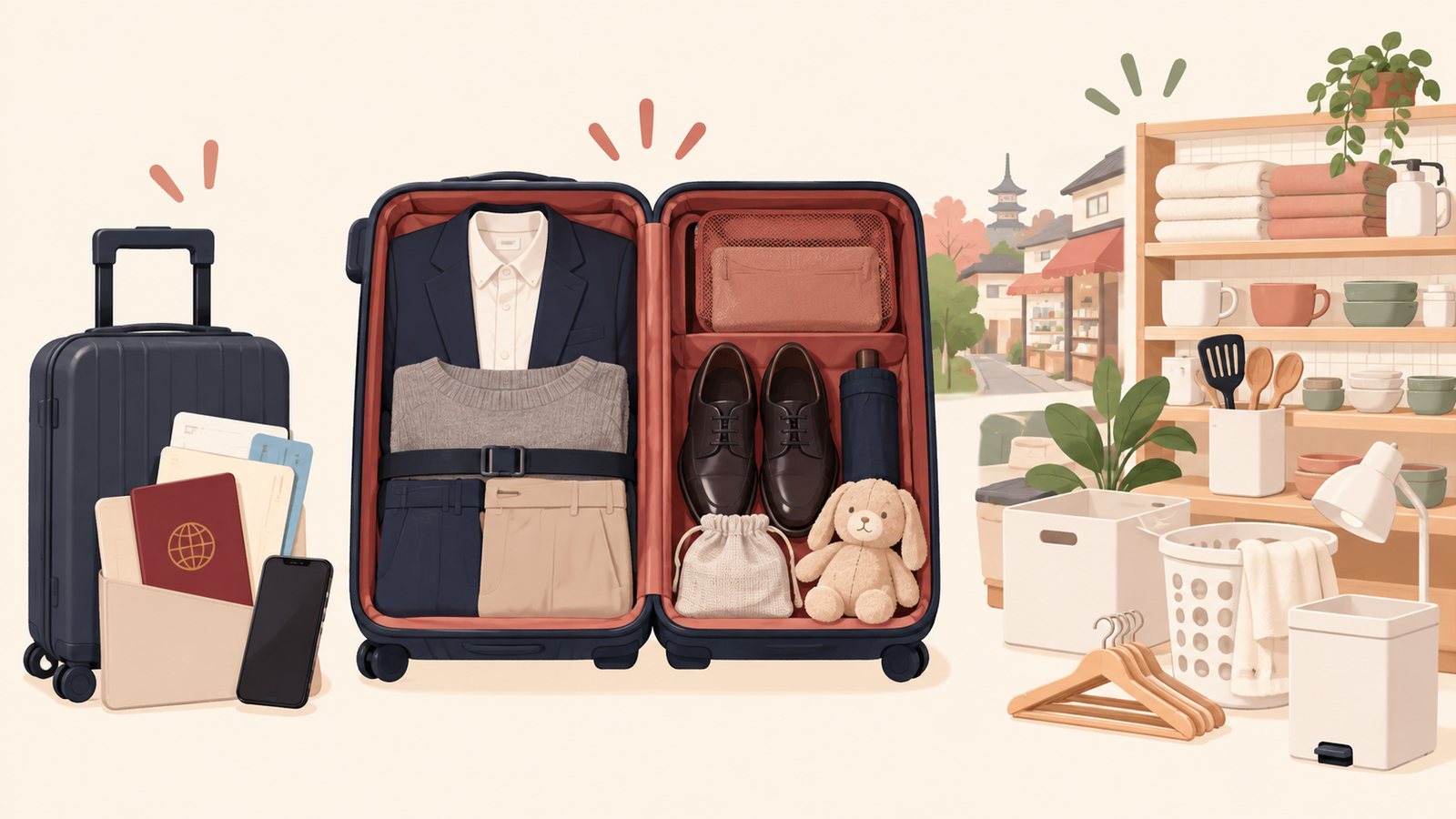
Ask the school about its dress expectations before buying a new wardrobe. Bring a small set of comfortable, suitable outfits and shoes for the first workdays, then adjust after you have seen the workplace and local weather. If a shoe or clothing size is difficult for you to find, prioritize reliable pieces you already own.
Japan has a range of climates and buildings. Pack for your arrival season and destination instead of a generic image of “Japan weather.” Layers are useful when you do not yet know how warm your accommodation or workplace will feel. Avoid carrying months of supplies without first checking what can be bought near your future home.
3. Bring a few personal items that matter
A familiar item can make the first weeks easier: a favorite book, a small keepsake, or a particular toiletries product you know works for you. Products sold in Japan vary by shop and location, so one person’s “impossible to find” item may be easy for another to buy. Start with a small amount of your preferred everyday product rather than assuming every alternative is unsuitable.
If you are thinking of packing familiar sauces, sweets or other foods, check the exact ingredients and product before travel. Meat products, fruit, plants and other goods may be prohibited or require inspection. Use Japan Customs’ passenger guidance, the Animal Quarantine Service and Plant Protection Station for the current rules. Do not rely on a shop’s packaging or a purchase at an airport as proof that an item can enter Japan.
4. Check medication before you pack it
Medicines need their own check because the rules depend on the ingredient, quantity and type. A medicine available by prescription in your home country is not automatically permitted in Japan under the same conditions. Consult the Ministry of Health, Labour and Welfare’s personal-use guidance and, for controlled substances, the Narcotics Control Department’s guidance well before departure. Follow their application instructions if your medication requires advance permission.
Keep medicine in its original packaging with the information needed to identify it, and check airline rules about where it belongs in your baggage. If you are unsure about a specific product, contact the authority named in the official guidance rather than guessing from a general packing list.
5. Buy ordinary home basics after you see the room
Bedding, storage boxes, cleaning products and kitchen tools depend on the accommodation. Ask what is included and measure your space before buying bulky items. The first local shopping trip can cover simple toiletries and groceries; our Japanese supermarket guide explains what to expect at the store.
If you have not chosen a place to live, read our guide to choosing an area in Japan and our explanation of Japanese apartment listings. A packing decision is easier once you know whether your first home is furnished, how much storage it has and where you can shop.
A simple packing decision table
| Take with you | Check first | Usually decide after arrival |
|---|---|---|
| Required travel and job documents, arrival contacts, a small set of suitable clothes. | Medication, food, plants, airline baggage restrictions and electrical compatibility. | Bulky home supplies, most cleaning products and storage fitted to your room. |
| Preferred hard-to-fit shoes or a small personal comfort item. | Whether your accommodation provides bedding, appliances or kitchen equipment. | Extra household quantities once you learn your neighborhood. |
Before closing your bags, check each item against three questions: Will I need it in the first week? Is it hard for me to replace? Am I allowed to bring it? That leaves room for the things that matter to you without turning a move into a shipment of guesses.
Planning the move around a teaching role
If you are considering b Watashino Eikaiwa, compare the work environment described here with the current Lesson Partner listing. Once you know your actual role and location, your packing list becomes much more specific.