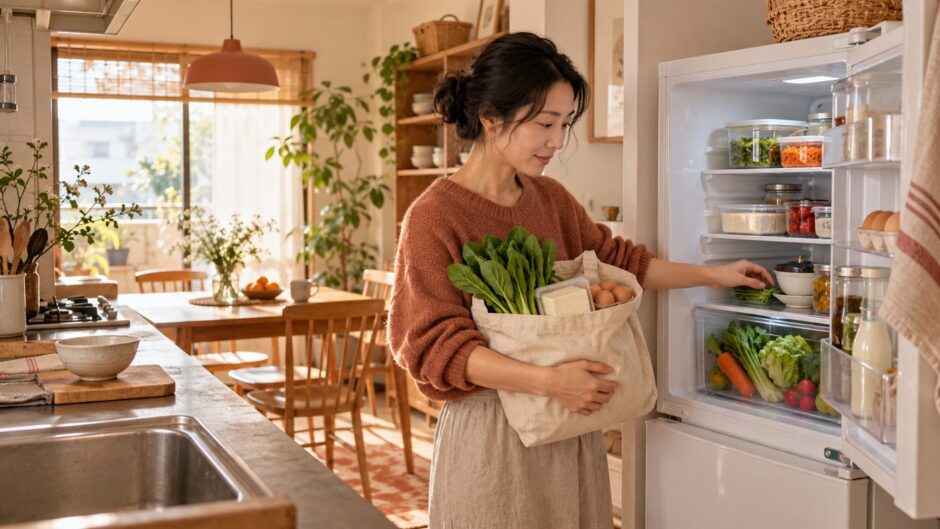

You have moved into a Japanese apartment and the refrigerator has a dial marked 弱・中・強. Which way makes it colder, and where should you put the groceries? On many models, 強 means stronger cooling, 中 is the normal starting point, and 弱 means gentler cooling. Check your model’s manual and the food package first: a compartment name does not override a label such as 要冷蔵 or a stated storage temperature.
Japanese refrigerator words at a glance
| Japanese | Reading | Meaning |
|---|---|---|
| 冷蔵室 | reizō-shitsu | Refrigerator compartment |
| 冷凍室 | reitō-shitsu | Freezer compartment |
| 野菜室 | yasai-shitsu | Vegetable drawer; its conditions vary by model |
| チルド室 | chirudo-shitsu | Chilled compartment; check the model’s temperature and recommended foods |
| パーシャル | pāsharu | Partial freezing setting or compartment on some models; not the same as an ordinary freezer |
| 温度調節 | ondo chōsetsu | Temperature adjustment |
| 弱・中・強 | jaku・chū・kyō | Weak, medium, strong cooling on many controls |
| 製氷 | seihyō | Ice making |
| 要冷蔵 / 要冷凍 | yō-reizō / yō-reitō | Must be kept refrigerated / frozen, on food packaging |
What to do when you move in
- Find the model number and manual. Labels, drawer positions and settings change by brand and model. Panasonic’s manual search is one example of how to look up a model.
- Start with the normal setting described in the manual. On some refrigerators this is 中 or 通常. Sharp explains that a small refrigerator may need adjustment according to room temperature and actual cooling, and that stronger cooling is toward 強.
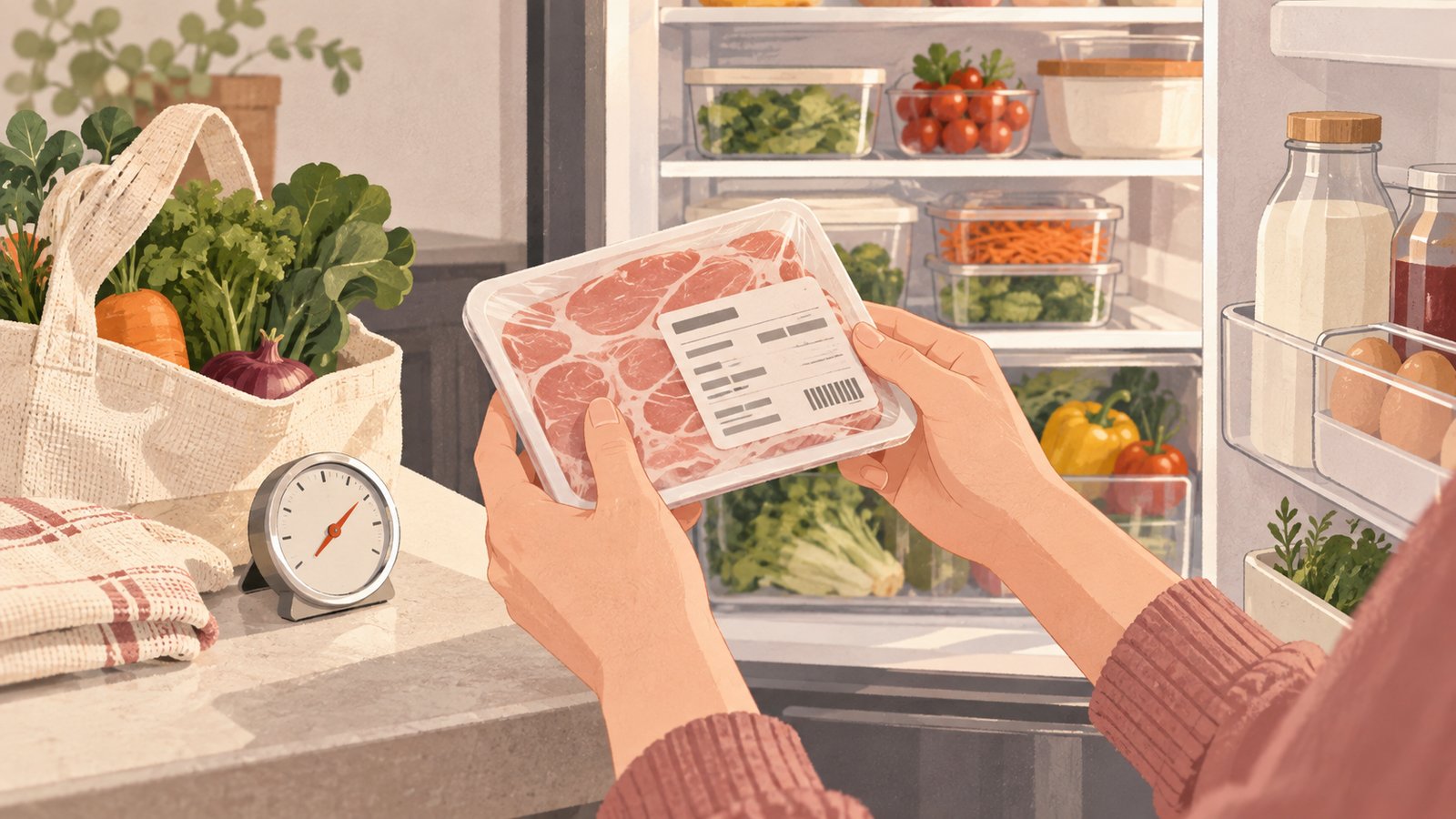
- Check the package. Put food marked 要冷蔵 or 要冷凍 into a suitable compartment promptly. The Ministry of Agriculture, Forestry and Fisheries advises following package instructions, including stated storage temperatures.
- Check the actual temperature if unsure. The ministry’s food safety guidance recommends a refrigerator at 10°C or below and a freezer at −15°C or below. These are food safety benchmarks, not a promise that every spot in a dial set to 中 has the same temperature. A refrigerator thermometer can help you check.
Which compartment should I use?
Use the main 冷蔵室 for foods labeled for refrigeration, subject to their package instructions. Put frozen foods in the 冷凍室. The 野菜室 is designed for produce in many models, but it may be warmer than the main compartment; do not assume it is suitable for an item labeled to stay at a specific low temperature. A チルド室 or パーシャル setting can have special conditions and may partly freeze food, so check the manual before placing delicate items there. Sharp’s compartment guide gives example temperatures under defined test conditions and directs users to their own manual.
If food in the main compartment is freezing, do not simply turn the refrigerator off. Check whether it sits against a cold air outlet, review the dial and manual, and confirm the temperature. If the unit seems insufficiently cold, check the door closure and setting, then follow the maker’s troubleshooting guidance. Keep the door opening time short; the ministry notes that repeated or lengthy openings raise the inside temperature.
Useful Japanese to ask a landlord or housemate
- この冷蔵庫の型番はどこですか。 Kono reizōko no kataban wa doko desu ka? — Where is this refrigerator’s model number?
- 温度調節は「中」でいいですか。 Ondo chōsetsu wa “chū” de ii desu ka? — Is “medium” the right temperature setting?
- この食品は冷凍室に入れますか。 Kono shokuhin wa reitō-shitsu ni iremasu ka? — Does this food go in the freezer?
For package instructions, read our guide to Japanese food dates and storage labels. Our egg carton guide explains another common supermarket label.
For the next step after storage, see our guide to Japanese frozen food cooking labels. For more help around the home, explore our everyday guide to living in Japan.