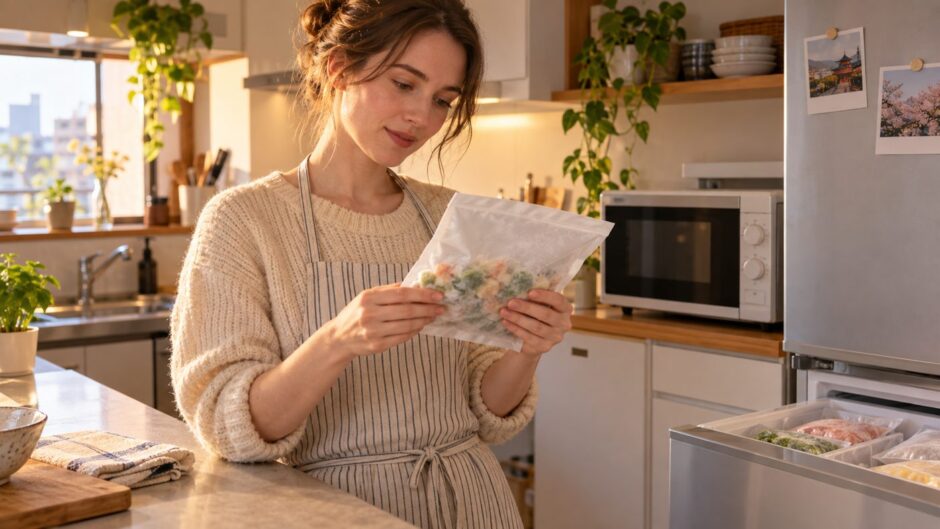

You have a Japanese frozen meal in your freezer, but the packet says 凍ったまま, 自然解凍 or 加熱してお召し上がりください. Read the cooking directions on that exact packet before you open it. 凍ったまま means cook it from frozen. 自然解凍 means room-temperature thawing is an approved option only when the product explicitly says so. 加熱してお召し上がりください means it needs cooking or heating before eating.
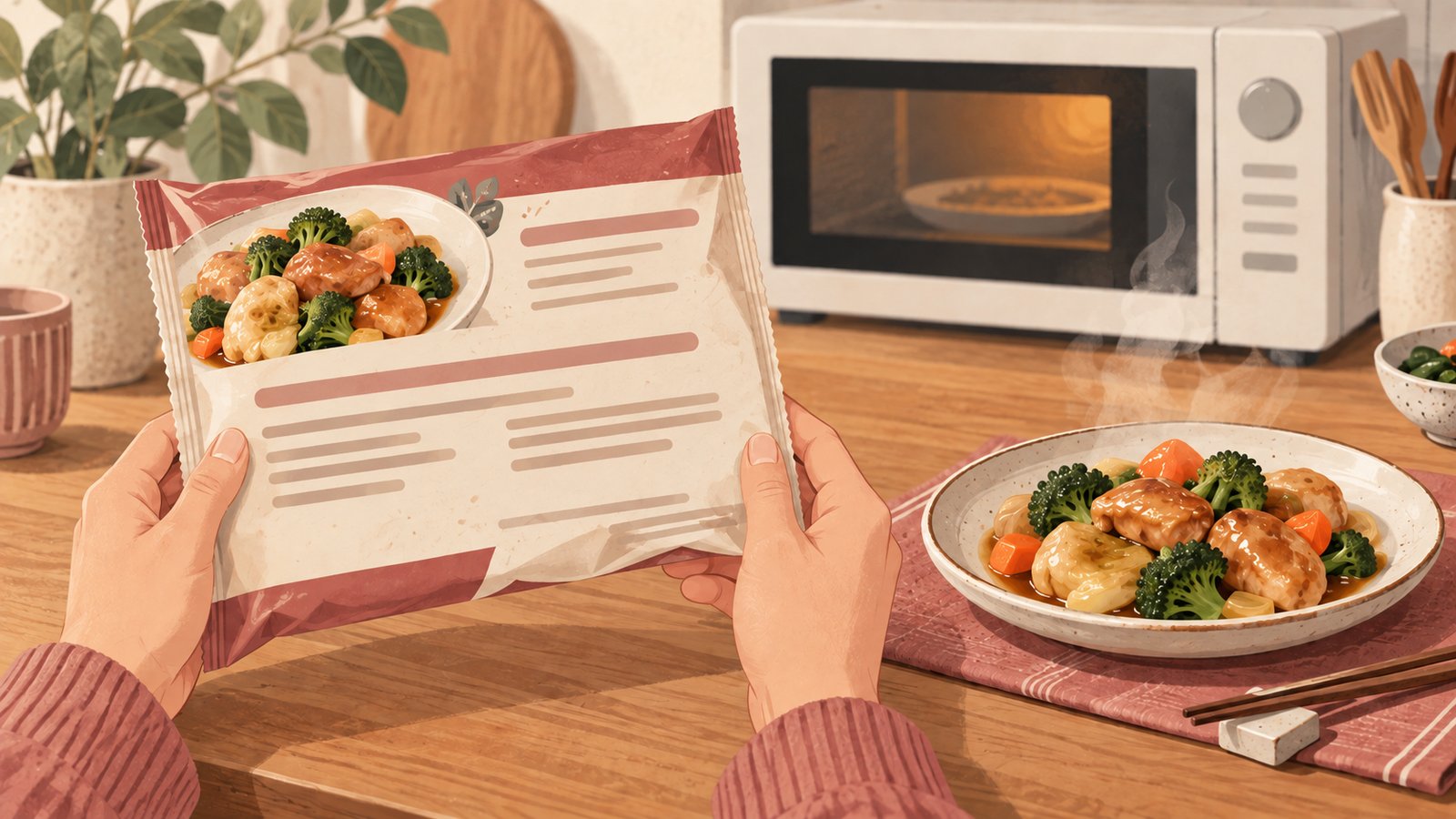
Japanese instructions on a frozen food package
| Japanese | Reading | What to do |
|---|---|---|
| 調理方法 | chōri hōhō | Cooking directions; start here |
| 凍ったまま | kōtta mama | While still frozen; do not pre-thaw unless instructed |
| 電子レンジ | denshi renji | Microwave; match the stated wattage and quantity |
| 500W / 600W | go-hyaku watto / roppyaku watto | Microwave power levels, often with different times |
| ラップをかけずに | rappu o kakezu ni | Without plastic wrap |
| ラップをかけて | rappu o kakete | Cover with microwave-safe wrap as directed |
| 自然解凍 | shizen kaitō | Thaw without heating, only when the product explicitly permits it |
| 加熱してお召し上がりください | kanetsu shite omeshiagari kudasai | Heat or cook before eating |
| 加熱調理の必要性 | kanetsu chōri no hitsuyōsei | Whether heating is required; a package information field |
| 要冷凍(−18℃以下) | yō-reitō (mainasu jūhachi-do ika) | Keep frozen at the temperature specified on this package |
A safe reading order before you cook
- Check whether heating is required. Look for 加熱調理の必要性 and wording such as 加熱してお召し上がりください. The Japan Frozen Food Association explains that frozen foods display heating needs and cooking directions. Follow those directions even if a similar-looking product can be eaten after thawing.
- Check whether to start frozen. A package may say 凍ったまま. The Ministry of Agriculture, Forestry and Fisheries notes that methods differ by food and that some products are heated directly from frozen.
- Match quantity, power and covering instructions. Read whether the time is for one piece or a whole bag and whether the package says 500W or 600W. Follow instructions about the tray, bag and plastic wrap; do not microwave packaging unless it explicitly says to.
- Check the result. Heating can be uneven. If the middle is still cold when a product requires heating, follow the packet’s additional-heating instructions and ensure it is heated through before eating. Handle hot steam carefully.
For example, one Nichirei dessert product lists both microwave preparation and natural thawing, while its microwave directions specify no wrap. That example does not apply to every frozen meal. A different Nichirei edamame product lists natural and running-water thawing along with separate boiling and microwave methods.
Two common mistakes
“Frozen food is already cooked.” Some products require heating even if they look ready to eat. Check the stated heating requirement, not the photo on the front. “自然解凍 is fine for any frozen item.” It is a product-specific method. The ministry advises using quicker methods unless the package expressly calls for room-temperature thawing. Put purchases into the freezer promptly and follow the storage temperature on the bag.
Useful Japanese when you need help
- これは自然解凍で食べられますか。 Kore wa shizen kaitō de taberaremasu ka? — Can this be eaten after natural thawing?
- 加熱が必要ですか。 Kanetsu ga hitsuyō desu ka? — Does it need heating?
- 電子レンジは何ワットで何分ですか。 Denshi renji wa nan-watto de nan-pun desu ka? — What microwave power and time should I use?
For shopping, price tags and other package labels, start with our grocery shopping guide.
For the controls on the appliance, see our Japanese microwave button guide. For storage compartments, see our refrigerator label guide.