


Your recipe calls for すりごま, but the supermarket shelf has several packages marked ごま. For a dry, ground ingredient, look for すりごま. If the recipe asks for whole seeds or a smooth paste, choose a package with the corresponding word.
Match the label to the texture
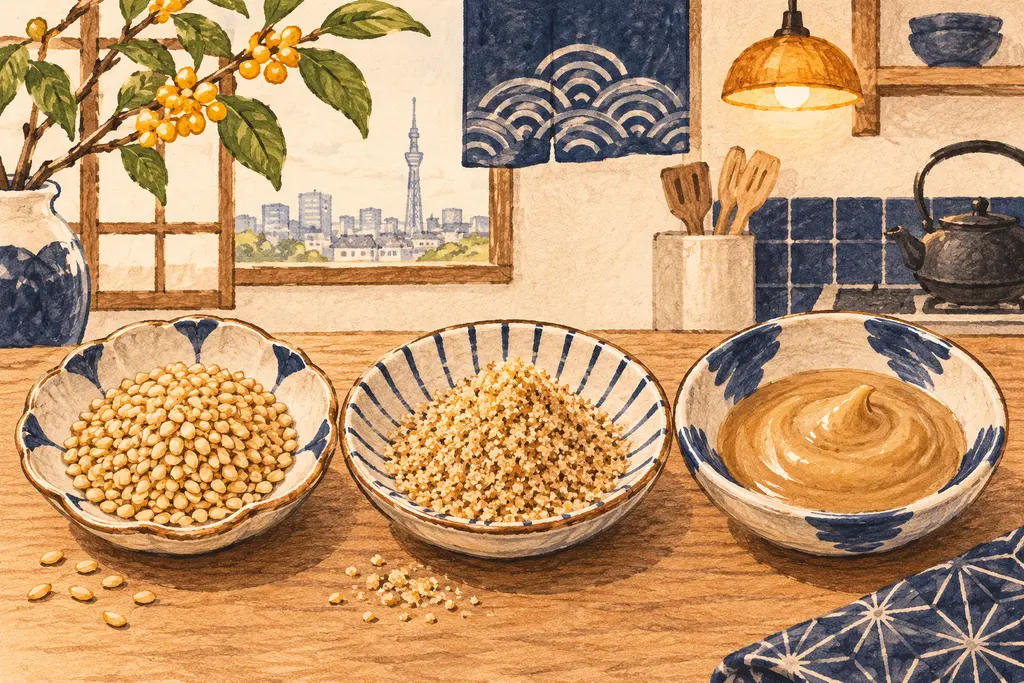
| Label | Form | Common use |
|---|---|---|
| いりごま | Roasted sesame seeds, typically whole | Sprinkle over rice or vegetables. |
| すりごま | Ground sesame | Mix into a coating or sauce for ごまあえ. |
| ねりごま | Sesame paste | Stir into a dressing or soup for a smooth texture. |
| ごま油 | Sesame oil | Use when the recipe calls for oil. |
白ごま means white sesame and 黒ごま means black sesame. The color can appear alongside any grinding or roasting term, so check both parts of the label. For example, 黒すりごま is ground black sesame.
Choose a package for your recipe
If you plan to make spinach ごまあえ, a packet of ground sesame will mix into the seasoning without a grinder. If you buy whole roasted seeds instead, grind a portion before mixing it. A paste provides a different consistency, so follow recipe quantities for the form you are using.
Ask for ground white sesame
白のすりごまはどこにありますか。
English. Where can I find ground white sesame?
If you need an unsweetened paste or have dietary restrictions, read the package ingredient list. Products sold as sesame dressings or spreads can contain additional ingredients. For other headings on the package, see our guide to Japanese supermarkets.