
You have booked a haircut in Japan, but “just a little shorter” may leave too much room for interpretation. Show a reference photo, say how much length you want removed, and state what you want to keep. You can do all of that with a few short Japanese phrases. Confirm the menu and total price before a color, treatment or other extra service begins.
Words on a Japanese salon menu
| Japanese | Reading | Meaning | Why it matters |
|---|---|---|---|
| 美容室/美容院 | biyōshitsu / biyōin | Hair salon | Common terms when searching or booking |
| カット | katto | Haircut | Check what else the listed price includes |
| シャンプー・ブロー | shanpū / burō | Wash and blow-dry | May be included or charged separately |
| 前髪 | maegami | Fringe / bangs | Specify the length separately |
| 毛先 | kesaki | Hair ends | Useful for a small trim |
| すく/量を減らす | suku / ryō o herasu | Thin out / reduce volume | Ask how much before agreeing |
| カラー/リタッチ | karā / ritatchi | Color / root touch-up | Clarify the exact service and price |
| トリートメント | torītomento | Hair treatment | May be an optional add-on |
| 指名 | shimei | Request a particular stylist | A stylist fee may apply |
| ロング料金 | rongu ryōkin | Extra charge for longer hair | Check the salon’s own length bands |
Menus differ by salon. Actual salon listings show examples where shampoo and blow-dry are included, and others where a fringe cut or color has separate charges; some list extra fees for hair length or a requested stylist. Check this published salon menu as an example, then confirm the terms of your booking. Prices and menus can change.
Before the appointment: book the service you want
If you only need a cut, select カット and look for シャンプー・ブロー込み (“wash and blow-dry included”). If you want color or a treatment, do not assume it is included in the cut. A simple question is 「カットとシャンプーで、合計いくらですか。」 (Katto to shanpū de, gōkei ikura desu ka? — How much is the cut and shampoo in total?)
If you have questions about a hair product or chemical service, tell the stylist before it starts. Your hair texture, previous color or treatment history, and desired result matter; a photograph helps the stylist discuss what is practical.
What to say in the chair
| Japanese phrase | Reading | Meaning |
|---|---|---|
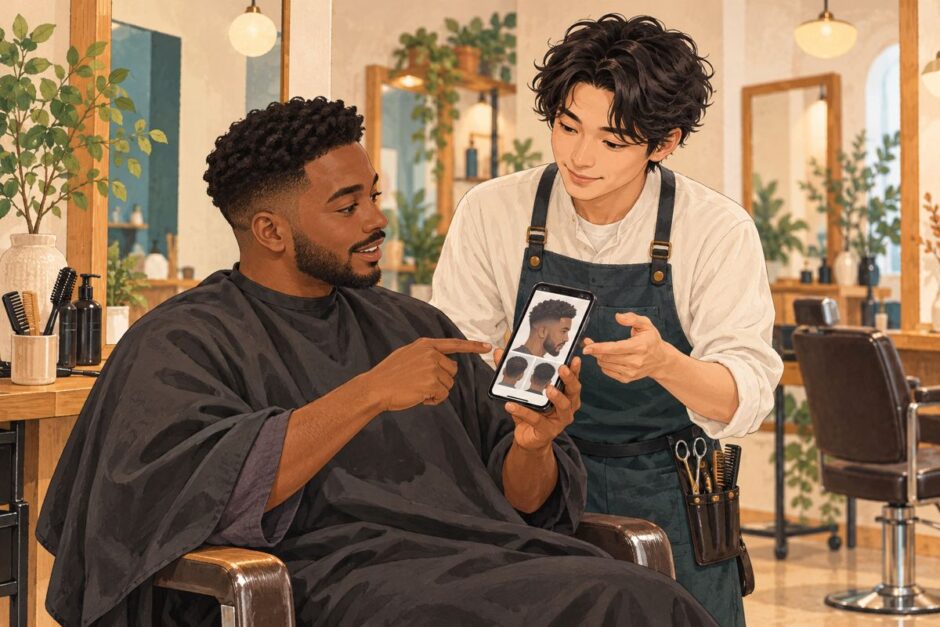
| この写真のようにしたいです。 | Kono shashin no yō ni shitai desu. | I’d like it like this photo. |
| 毛先を2センチくらい切ってください。 | Kesaki o ni-senchi kurai kitte kudasai. | Please trim about two centimeters from the ends. |
| 長さはあまり変えたくないです。 | Nagasa wa amari kaetakunai desu. | I don’t want to change the length much. |
| 前髪は眉毛の下くらいにしてください。 | Maegami wa mayuge no shita kurai ni shite kudasai. | Please leave my bangs around below my eyebrows. |
| 量を少しだけ減らしたいです。 | Ryō o sukoshi dake herashitai desu. | I’d like a little less volume. |
| すかないでください。 | Sukanaide kudasai. | Please don’t thin it out. |
| まず少し切って、確認できますか。 | Mazu sukoshi kitte, kakunin dekimasu ka? | Could we cut a little first and check? |
Say both the desired change and the boundary. For example: 「毛先を2センチくらい。長さはあまり変えたくないです。」 Show a photo of the front, sides and back when those details matter. “A little” alone means different things to different people.
Check before an extra service
If the stylist suggests a treatment or color, you can say 「それは追加料金ですか。」 (Sore wa tsuika ryōkin desu ka? — Is that an extra charge?) or 「今日はカットだけでお願いします。」 (Kyō wa katto dake de onegai shimasu. — Just the haircut today, please.) This makes the service and price clear without sounding rude.
At the final mirror check
If you want a small adjustment, say 「もう少しだけ短くできますか。」 (Mō sukoshi dake mijikaku dekimasu ka? — Could you make it just a little shorter?) and point to the area. If you like it, 「これで大丈夫です。ありがとうございます。」 (Kore de daijōbu desu. Arigatō gozaimasu. — This is good, thank you.)
Learning to read everyday labels helps in other situations too. See our guides to laundry detergent labels and Japanese ATM buttons.