
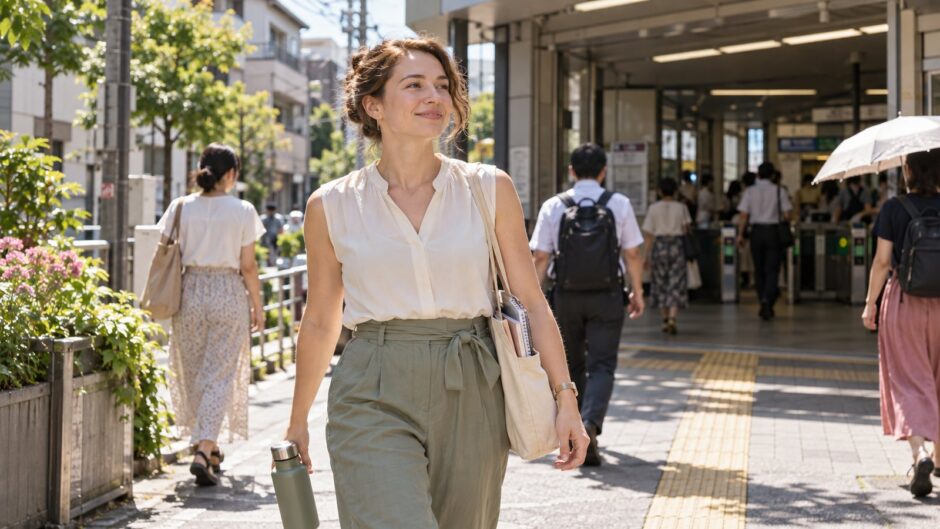

Teaching in Tokyo during summer? Check the day’s heat conditions before you travel, carry water, reduce time in direct sun, and give yourself time to cool down before a lesson. If you feel dizzy, faint, unusually weak, or unwell in the heat, stop and move to a cooler place. Do not push through a class or commute to “see if it passes.”
Heat illness is called 熱中症 (netchūshō) in Japanese. It can happen indoors as well as outdoors. The practical goal is to manage your whole teaching day—home, commute, and classroom—not just the hottest part of a walk.
Before leaving: check the heat stress index
The Ministry of the Environment publishes an English-language Heat Illness Prevention Information site with current and forecast heat stress index (WBGT) and heatstroke alerts. WBGT reflects more than the air temperature alone. Check your area and the times you will be outside, especially if you have a long transfer or an afternoon walk.
暑さ指数 (atsusa shisū) means “heat stress index.” A 熱中症警戒アラート (netchūshō keikai arāto) is a heatstroke alert. An alert is a reason to review your route and outdoor plans; it is not a guarantee that a day without an alert is safe for everyone. Health, activity, and conditions around you also matter. The ministry explains the alert system here.
Make the commute easier on your body
- Allow more time. A few extra minutes let you walk at a comfortable pace and take a shaded route instead of rushing.
- Bring a drink. Take regular opportunities to drink. If you are sweating heavily, follow official guidance on replacing fluids and salt; people told by a clinician to limit either should follow their medical instructions.
- Limit direct sun. Use shade, a hat, or a sun umbrella if practical. A small fan or cooling item may feel comfortable, but it does not replace getting out of dangerous heat.
- Plan a cool stop. Know a place along your route where you can pause if you feel unwell.
Choose breathable clothes that fit your school’s actual dress policy. Carry a layer if the teaching room feels cool after you arrive. Our eikaiwa dress code guide has more on checking expectations without guessing.
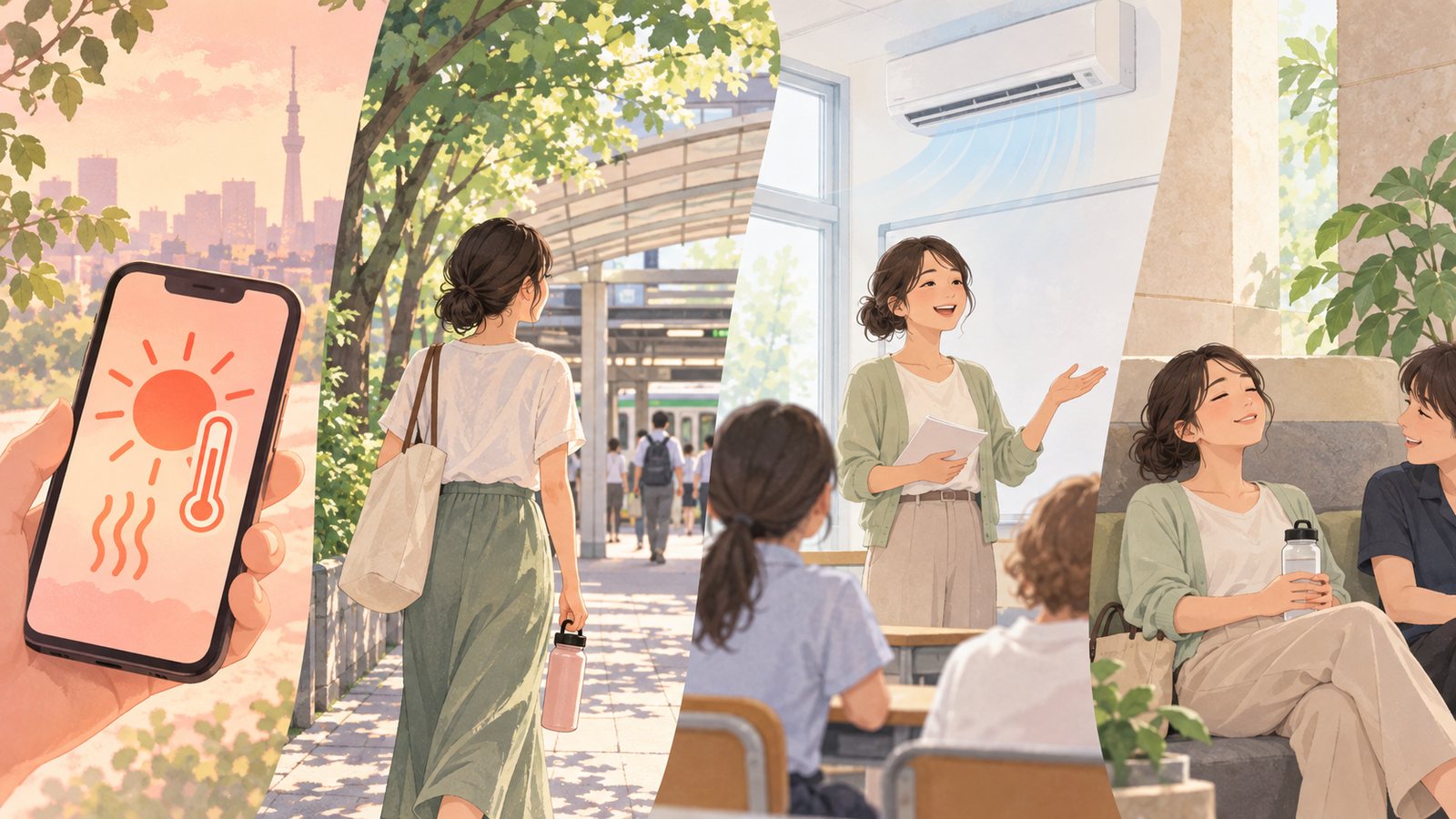
At school: cool down before the first lesson
If you arrive hot from the station, drink and settle before teaching when the schedule allows. Keep a drink accessible under the school’s rules, and know how to raise a concern if the room is too warm. Indoor air conditioning does not remove every risk, particularly if you have already spent time in the heat.
A busy day of consecutive lessons makes breaks easy to overlook. Look at your timetable and plan small opportunities to drink and rest. Tell a manager promptly if you feel unwell or cannot teach safely. Time management matters, but a lesson should never take priority over an urgent health concern.
If heat illness may be starting, act early
Dizziness, headache, unusual fatigue, or nausea in hot conditions may be signs of heat illness. Stop the activity, move to a cool place, loosen clothing, and cool the body. If the person is fully alert and able to swallow, they can take fluids as appropriate. Do not force a drink on someone who cannot swallow or is not fully responsive.
Call 119 for an ambulance in Japan if someone is unconscious, confused or responding abnormally, cannot drink on their own, has a seizure, or is too weak to move. Do not leave them alone. The Ministry of the Environment’s prevention and response guidance and Ministry of Health, Labour and Welfare guidance explain these actions. If symptoms do not improve promptly after cooling and rest, seek medical help.
If you have a condition or medication that may affect your response to heat, ask a healthcare professional for advice suited to you. General tips on a blog cannot replace that assessment.
A quick summer teaching-day checklist
- Check the official WBGT forecast and alerts for your route.
- Pack water and any items you need for sun protection and your school’s dress code.
- Leave enough time to avoid rushing and to cool down before class.
- Identify whom to tell if you feel unwell at work.
- Stop, cool down, and get help when symptoms appear.
For broader preparation, see time management for English teachers and choosing a Tokyo apartment with the commute in mind.