


You want tofu for dinner, but the shelf offers 木綿 (momen), 絹ごし (kinugoshi), and 充填 (jūten). If you need cubes that hold together in a stir-fry, start with firmer 木綿. If you want a smooth texture for cold tofu or soup, try 絹ごし. 充填 describes tofu set inside its package; it can be smooth, but it is a different production method. Check the particular pack for storage and date instructions before buying.
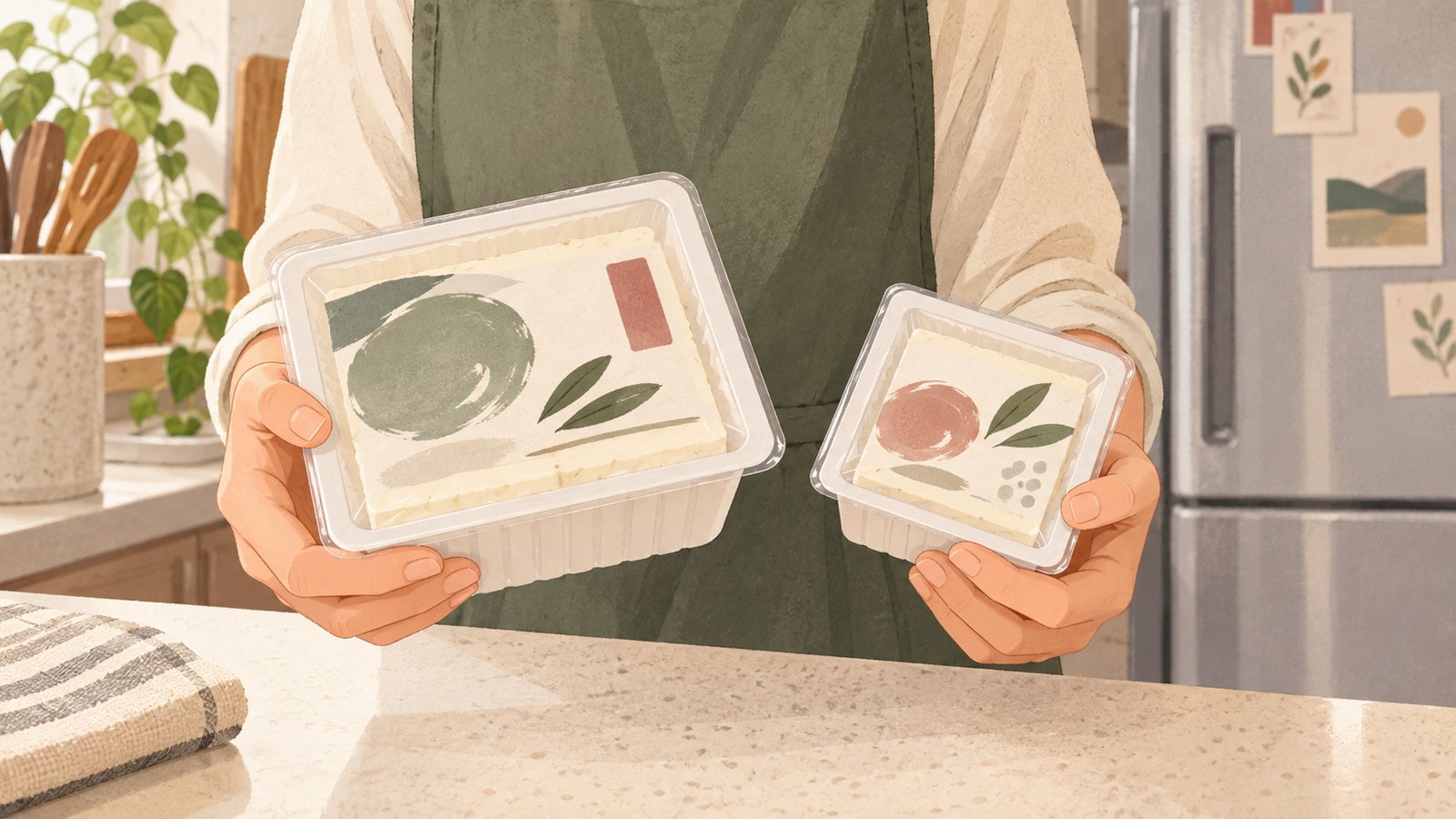
Words to find on a tofu pack
| Japanese | Reading | What it means |
|---|---|---|
| 木綿豆腐/もめん | momen dōfu / momen | Firm, pressed tofu with a more textured surface |
| 絹ごし豆腐/絹 | kinugoshi dōfu / kinu | Softer, smooth-textured tofu |
| 充填豆腐 | jūten dōfu | Tofu set in its sealed container |
| 寄せ豆腐 | yose dōfu | Soft, freshly gathered-style tofu; texture varies |
| 焼き豆腐 | yaki dōfu | Tofu with a browned surface, often used in simmered dishes |
| 国産大豆 | kokusan daizu | Made with domestically grown soybeans |
| 原材料名 | genzairyōmei | Ingredients |
| 凝固剤/にがり | gyōkozai / nigari | Coagulant / nigari, one kind used to set tofu |
| 内容量 | naiyōryō | Net amount |
| 消費期限/賞味期限 | shōhi kigen / shōmi kigen | Use-by / best-before date, as printed on that product |
| 要冷蔵/常温保存可能 | yō reizō / jōon hozon kanō | Refrigeration required / can be stored at room temperature under stated conditions |
| 開封後はお早めに | kaifū-go wa ohayame ni | Use promptly after opening |
Which one should you buy?
For pan-frying or a hearty stir-fry: Choose 木綿 if you want pieces that are easier to handle. Gently drain or press it if the recipe needs less moisture. For chilled tofu (冷奴, hiyayakko) or a soft mouthfeel: 絹ごし is an easy starting point. Add it gently to soup so it does not break apart. For a small sealed portion: Check 充填 products and their individual pack sizes; they are convenient when you do not want to open a large block. Some are smooth and delicate, so read the product description as well as the type.
The Ministry of Agriculture’s guide to soy foods describes the pressed texture of 木綿 and the smoother development of 絹ごし. Tofu maker Takano Foods explains the main types, and its production guide distinguishes 充填豆腐, which is filled and set in the container, from cut tofu. These names are useful guides to texture, but firmness differs among brands.
Read the rest of the label before checkout
- Ingredients: Find 原材料名 for soybeans and the listed coagulant. If you avoid soy, tofu is generally unsuitable; read our allergen-label guide for packaged-food wording. 国産大豆 refers to the soybean origin, not a guarantee about every ingredient.
- Amount: Compare 内容量 with the recipe and how many meals you will make. A three-pack may consist of separate small portions; inspect the label for the amount per pack.
- Date and storage: Read whether the package says 消費期限 or 賞味期限, then follow its 保存方法. Most chilled tofu belongs in the refrigerator. A specially processed product marked 常温保存可能 can have different unopened storage instructions; do not assume that every sealed 充填 pack is shelf-stable. The Consumer Affairs Agency’s tofu-labeling material separately addresses products allowed to be stored at room temperature.
Once opened, use tofu promptly even if the printed date is later. Takano Foods’ storage FAQ recommends refrigerating its unopened tofu and eating an opened pack as soon as practical. For the general distinction between use-by and best-before, see our Japanese date-label guide. Do not use tofu with a swollen pack, an unusual smell, or visible spoilage.
One sentence at the store
炒め物に使うなら、どちらが崩れにくいですか? (Itamemono ni tsukau nara, dochira ga kuzurenikui desu ka? — Which is less likely to crumble in a stir-fry?) You can also ask これは要冷蔵ですか? (Kore wa yō reizō desu ka? — Does this need refrigeration?) The pack’s directions are the final word for that product.
To compare the shelf price and quantity, use our Japanese supermarket price-tag guide. For the full shopping trip, return to our grocery shopping guide. At home, our Japanese refrigerator labels guide explains compartment names; follow the tofu pack itself for its storage requirements.