


You are choosing eggs for breakfast and see 賞味期限 and 生食用 on the carton. On a Japanese carton of shell eggs, the best-before date is especially relevant if you plan to eat the egg raw or lightly cooked. Check that it is marked for raw consumption, that the date has not passed, that the shells are intact, and that you can refrigerate the eggs promptly. A date alone cannot make a damaged or badly stored egg safe.
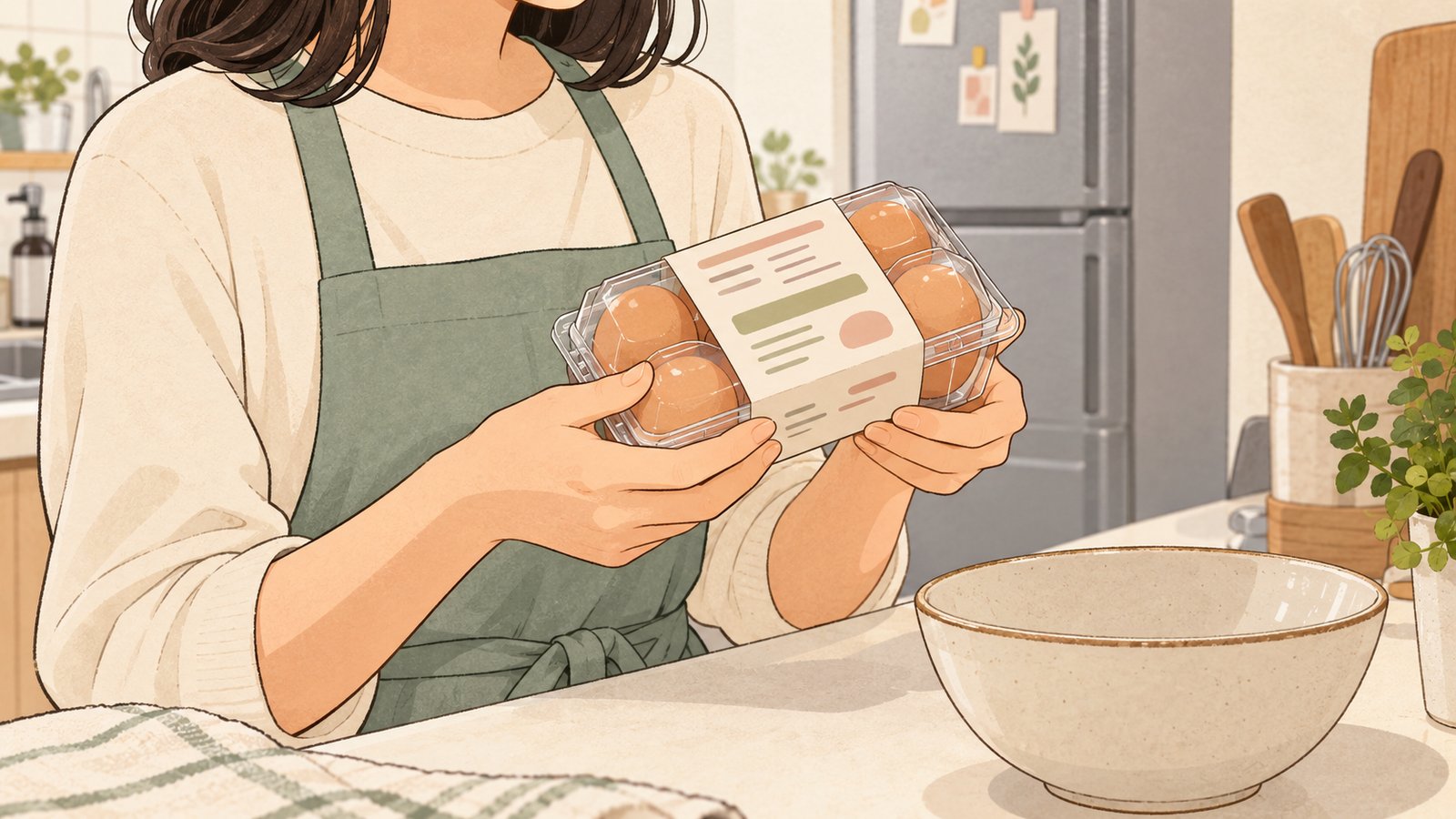
Words on a Japanese egg carton
| Japanese | Reading | Meaning for the buyer |
|---|---|---|
| 鶏卵 | keiran | Chicken eggs |
| 生食用 | namashokuyō | Intended for raw consumption under the label’s conditions |
| 加熱加工用/加熱用 | kanetsu kakōyō / kanetsuyō | For cooking or heat processing, not for raw use |
| 賞味期限 | shōmi kigen | Best-before date; for raw-use shell eggs, the raw-consumption limit under proper handling |
| 保存方法 | hozon hōhō | Storage instructions |
| 冷蔵保存/10℃以下 | reizō hozon / jū-do ika | Refrigerate / at 10°C or below |
| 期限経過後は十分に加熱 | kigen keika-go wa jūbun ni kanetsu | Cook thoroughly after the date |
| 産地 | sanchi | Origin |
| 採卵日/包装日 | sairanbi / hōsōbi | Collection date / packing date, if shown |
| 内容量/個数 | naiyōryō / kosū | Amount / number of eggs |
The wording and layout differ by producer. Look for the printed date where the label points you, including a side of the carton or individual egg label. Do not mistake 採卵日 or 包装日 for 賞味期限.
If you want to eat an egg raw
Choose a carton labeled 生食用 and use it within its printed 賞味期限. Check the shells for visible cracks or leaks. Refrigerate at home according to 保存方法, crack an egg only when you are ready to use it, and eat the prepared food promptly. The Ministry of Agriculture’s egg Q&A explains that the best-before date on eggs indicates the period for raw consumption and stresses refrigeration and prompt use after cracking. The health ministry’s shell-egg guidance distinguishes raw-use eggs from eggs intended for heat processing and excludes visibly cracked or otherwise abnormal eggs from the normal-egg category used for raw preparation.
生食用 does not mean zero risk. Anyone who needs to avoid raw or undercooked egg should choose a fully cooked preparation instead. The same caution applies to foods such as egg over rice, homemade mayonnaise, and runny egg dishes.
What if the date has passed?
Do not use a past-date egg raw. The printed date assumes proper storage; it is not a promise that every egg remains usable after that day. The agriculture ministry says an egg may still be used after the best-before date if its condition is sound when cracked and the food is thoroughly heated throughout. Use it as soon as practical, follow the carton directions, and discard an egg with a cracked or leaking shell, an off smell, or other signs of spoilage. When you do not know how it was stored, discard it rather than trying to rescue it with cooking.
For ordinary packaged foods, our Japanese food date-label guide compares 賞味期限 with 消費期限. Eggs need the extra raw-consumption check explained here.
A quick check at the shelf and at home
- Read 生食用 or 加熱用 first, according to your intended dish. If it is unclear, choose thorough cooking.
- Find the actual 賞味期限, count, and storage instruction. Select a carton you can use within the date if you intend to eat any eggs raw.
- Look through the carton for visible cracks or leakage before buying. Carry it so the shells are protected.
- At home, put eggs in the refrigerator. Avoid prolonged warm storage or repeated temperature swings; the ministry explains that moisture on shells can create a route for microbes.
- Crack into a separate clean bowl when preparing a dish so you can assess the egg before combining it with other ingredients. Wash hands and utensils after handling raw egg.
Useful phrases: これは生食用ですか? (Kore wa namashokuyō desu ka? — Are these intended for raw consumption?) 賞味期限はどこに書いてありますか? (Shōmi kigen wa doko ni kaite arimasu ka? — Where is the best-before date?)
For other potentially confusing supermarket labels, see our meat label guide and seafood label guide. Check each product’s own use and storage directions; labeling can vary by product.
For help reading compartment names at home, see our Japanese refrigerator labels guide. For the wider shopping picture, start with our guide to grocery stores in Japan.