
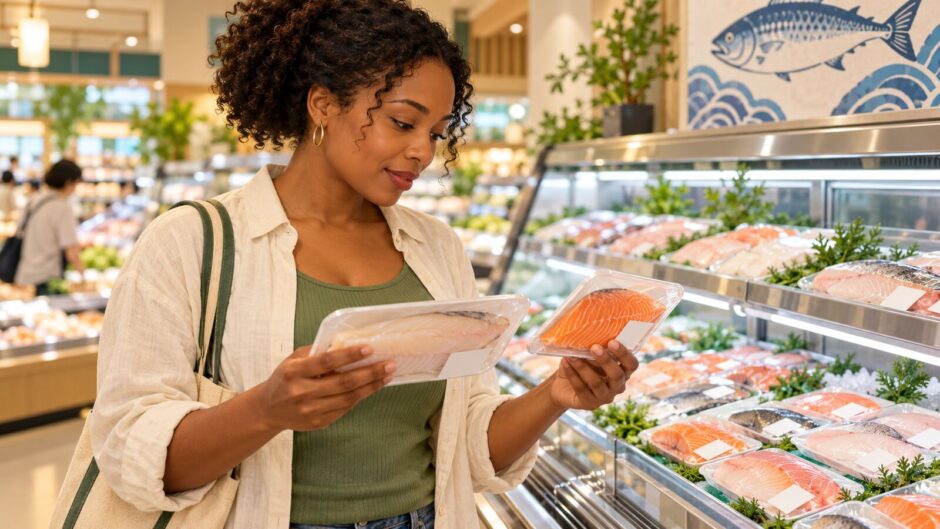

You want fish for dinner, but one pack says 刺身用, another says 加熱用, and a third says 解凍. Start with the eating instruction: 生食用 or 刺身用 means sold for raw eating; 加熱用 means cook it. Then read 解凍 (previously frozen), 養殖 (farmed), origin, date, and storage. A fresh-looking fillet without a raw-eating indication should not be treated as sashimi.
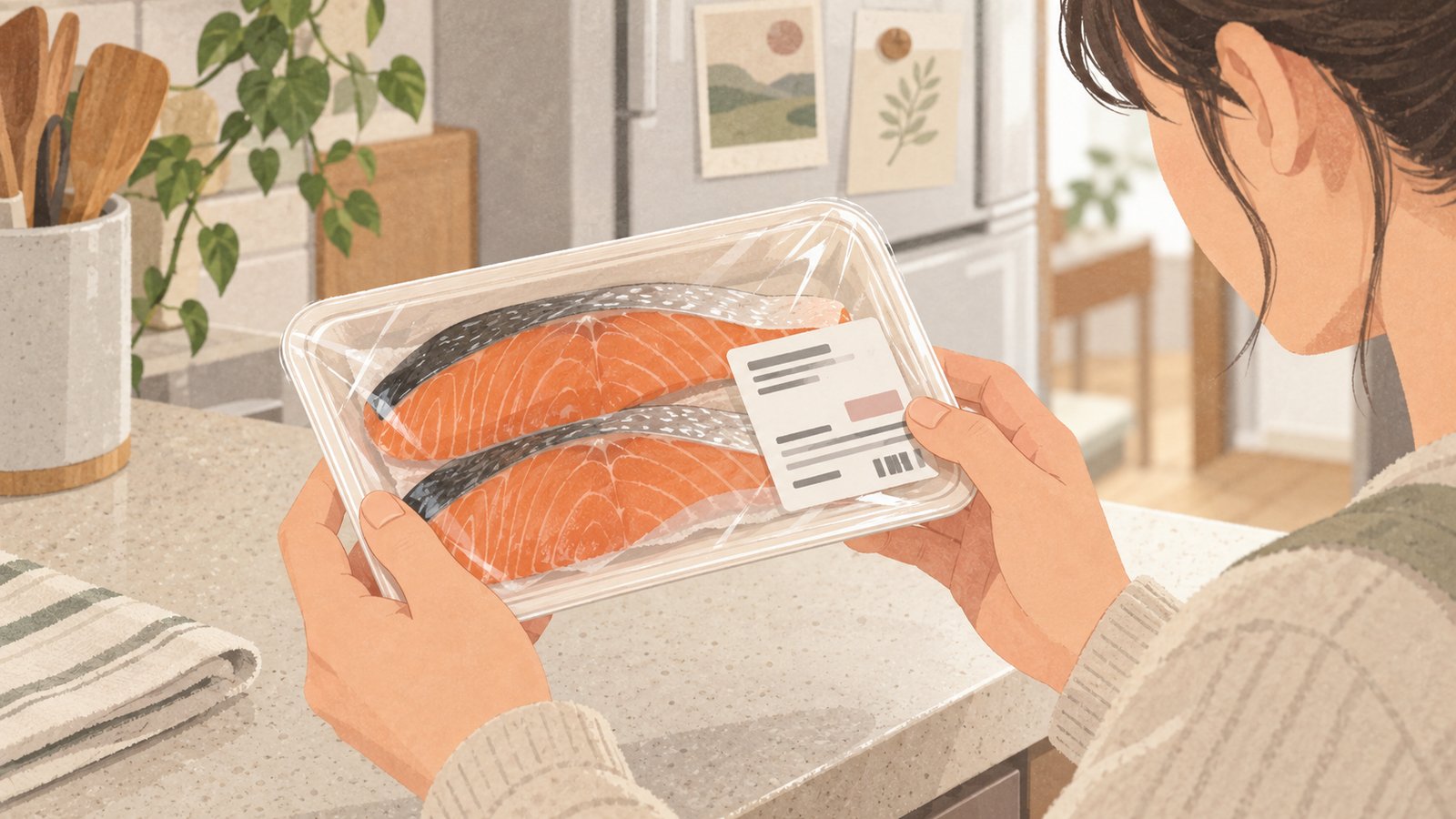
Japanese words on the seafood label
| Japanese | Reading | English and action |
|---|---|---|
| 生食用 | namashoku-yō | For eating raw; follow the product’s date and storage directions. |
| 刺身用 | sashimi-yō | For sashimi; a raw-eating indication on a fish product. |
| 加熱用 / 加熱調理用 | kanetsu-yō / kanetsu chōri-yō | For cooking; heat it before eating. |
| 解凍 | kaitō | Thawed after freezing; it does not itself say whether the fish may be eaten raw. |
| 養殖 | yōshoku | Farmed or cultured. |
| 天然 | tennen | Wild-caught, when used to distinguish from farmed. |
| 産地 / 原産地 | sanchi / gensanchi | Origin; check the area or country shown. |
| 消費期限 | shōhi kigen | Use-by date. |
| 保存方法 / 要冷蔵 | hozon hōhō / yō reizō | Storage instructions / refrigeration required. |
The Consumer Affairs Agency’s consumer guide to food labels includes examples of farmed yellowtail, thawed tuna for sashimi, and raw oysters. It explains that fresh seafood carries a name and origin, with 養殖 and 解凍 when applicable. Packaging and the position of the words vary by store and product.
Choose the right pack for your meal
- For sashimi, find a raw-eating indication. Look for 刺身用, 生食用, 生食, or similar wording on the relevant cut seafood. Do not infer it from how bright the flesh looks or from a sign saying “fresh.” The Ministry of Agriculture, Forestry and Fisheries (MAFF) says cut or shelled seafood without a raw-eating indication should be cooked.
- For a cooked dish, check the species and preparation. A label may include 切り身 (kirimi, fillet or cut piece), 塩さけ (shio sake, salted salmon), or 骨取り (hone tori, bones removed), depending on the product. These terms describe preparation, not permission to eat raw. Follow any 加熱用 instruction and any directions on a seasoned or processed pack.
- Read origin, then 養殖 or 解凍. A domestic seafood label may show a fishing area, an aquaculture prefecture, or in some cases a landing port or its prefecture; imported seafood shows a country. 養殖 identifies farming. 解凍 only tells you the product was frozen and then thawed. The Consumer Affairs Agency’s guide shows these as separate pieces of information.
- Check the date and storage before paying. Read 消費期限 and 保存方法 on the pack, then take it home without leaving it warm for an extended period. For the distinction between 消費期限 and 賞味期限, see our Japanese food-date guide.
Oysters need an especially clear decision
For oysters, 生食用 and 加熱用 are different sales categories. MAFF explains that you cannot judge raw-eating suitability by appearance or freshness; oysters marked 加熱用 must be cooked. A 生食用 label reflects specific production and handling conditions, not a promise that every risk is zero. Read the actual package and its storage instructions.
“Thawed” does not mean “ready to eat raw.” A thawed tuna pack might also say 刺身用, while a thawed cooking fillet might not. Treat the two statements separately. The Ministry of Health, Labour and Welfare’s Anisakis guidance explains why raw or inadequately prepared fish can pose a parasite risk; ordinary vinegar, soy sauce, and wasabi do not kill Anisakis. Buying a product explicitly sold for raw eating and following its handling directions is the practical starting point.
For help reading the compartment names at home, see our Japanese refrigerator labels guide. Follow the seafood package itself for the required storage conditions.
Questions to ask at the fish counter
- これは刺身用ですか? Kore wa sashimi-yō desu ka? Is this for sashimi?
- これは加熱して食べるものですか? Kore wa kanetsu shite taberu mono desu ka? Should this be cooked before eating?
- この魚は解凍品ですか? Kono sakana wa kaitō-hin desu ka? Was this fish previously frozen?
If you are comparing price by weight, our supermarket price-label guide explains 100g prices and tax. For another refrigerated counter, see our meat-label guide. For the whole trip, including the shopping flow, package dates and checkout, use our grocery shopping guide.