
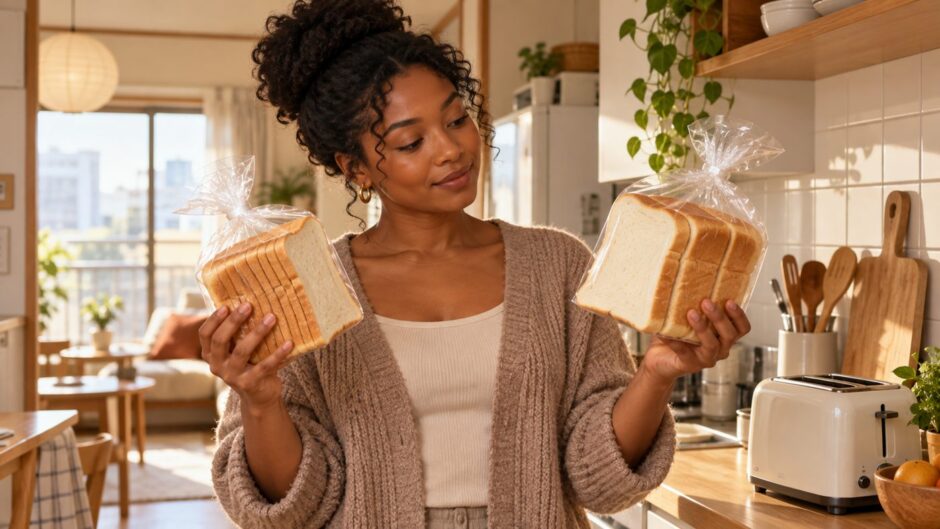

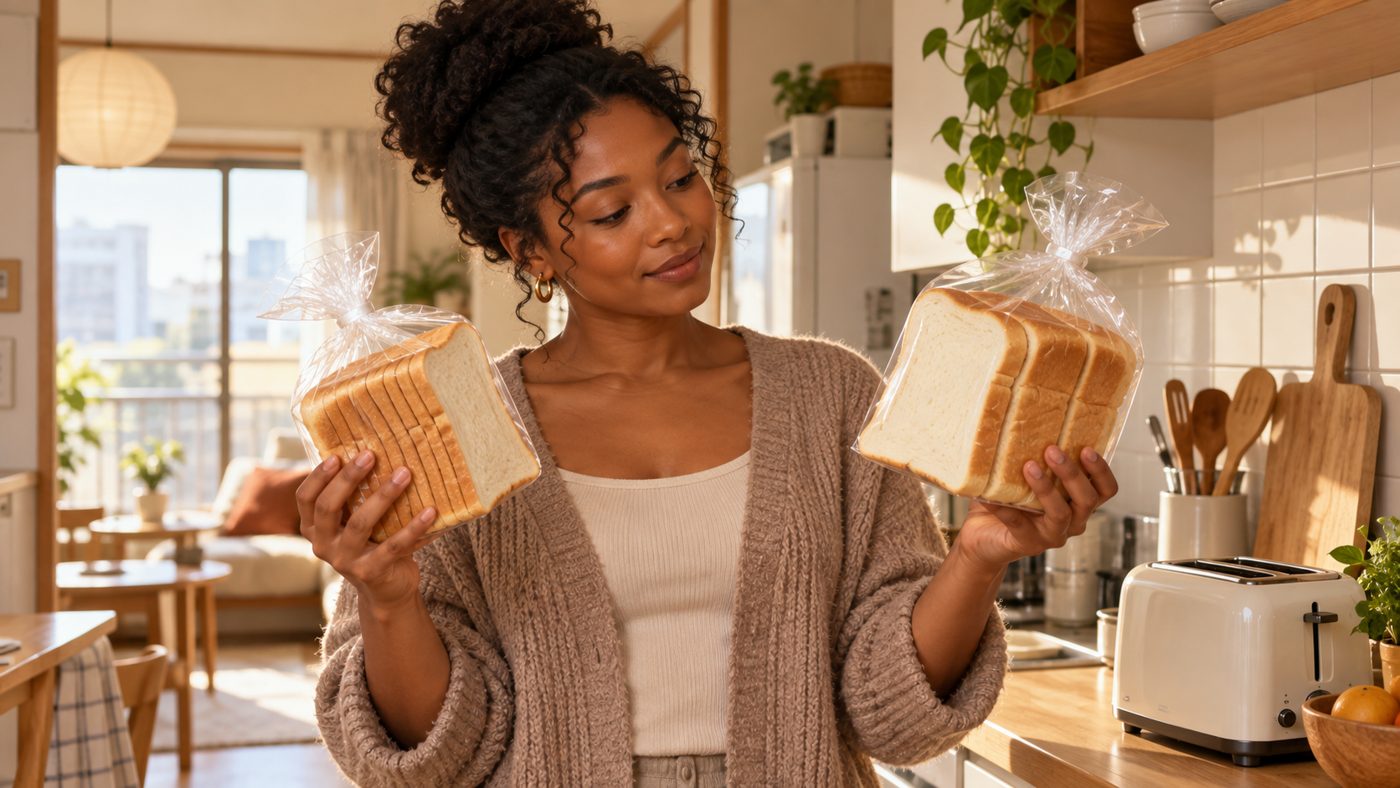
At a Japanese supermarket, you may see nearly identical bread bags marked 4枚切り, 6枚切り or 8枚切り. The number tells you how many slices the loaf is cut into: with a comparable loaf size, four slices are thicker and eight are thinner. It does not mean four or eight separate loaves. Pick the thickness you want, then check the ingredients, allergens and date on the actual bag.
Japanese words on a bread bag
| Japanese | Reading | What it means |
|---|---|---|
| 食パン | shokupan | Sandwich or toast bread, usually sold as a sliced loaf |
| 4枚切り / 6枚切り / 8枚切り | yon-mai-giri / roku-mai-giri / hachi-mai-giri | Loaf cut into four / six / eight slices; lower number usually means thicker slices |
| 山型 | yamagata | Domed loaf shape, rather than a square-topped loaf |
| 全粒粉 | zenryūfun | Whole wheat flour; check the ingredient list for the product’s actual composition |
| 原材料名 | genzairyō-mei | Ingredients |
| 一部に小麦・乳成分を含む | ichibu ni komugi・nyūseibun o fukumu | Contains wheat and milk ingredients; this is only an example, not a statement about every loaf |
| 消費期限 / 賞味期限 | shōhi kigen / shōmi kigen | Use-by / best-before date; follow the printed label |
| 保存方法 | hozon hōhō | Storage instructions |
Choose the right package in the aisle
- Pick thickness first. A thicker 4枚切り can suit a substantial toast; a thinner 8枚切り can suit a lighter sandwich. Check the actual slice size and pack quantity because loaves and products vary. Pasco’s product listing shows the same bread sold in different slice counts and gives nutrition per slice for each version.
- Turn the bag over. Read 原材料名 and the allergen statement rather than guessing from the front of the package. Bread may contain wheat, milk, eggs, soy or other ingredients depending on the product. Pasco explains its ingredient-display format and asks shoppers to rely on the package for allergy information.
- Check the date and storage directions. Do not assume every bread bag uses the same type of date or that a printed date applies after opening. The Consumer Affairs Agency’s food-labeling materials explain the label framework. Follow the manufacturer’s package directions for that loaf.
After opening: a common misunderstanding
Closing the bag does not reset its printed date or prevent spoilage. Follow the package’s storage note and inspect the bread before eating. Some makers advise freezing bread to preserve texture when you will not eat it promptly; Yamazaki explains its open-bag freezing advice in the context of bread texture and mold testing. Follow the instructions for the bread you bought rather than treating a general tip as a safety guarantee. If you see mold, do not use the bread.
Short Japanese questions you can use
- もっと薄い食パンはありますか。 Motto usui shokupan wa arimasu ka? — Do you have thinner sliced bread?
- これは何枚切りですか。 Kore wa nan-mai-giri desu ka? — How many slices is this loaf cut into?
- アレルギー表示はどこですか。 Arerugī hyōji wa doko desu ka? — Where is the allergen information?
For more on use-by, best-before and storage labels, see our food dates guide. Our Japanese allergen-label guide helps you read other packaged foods too.