
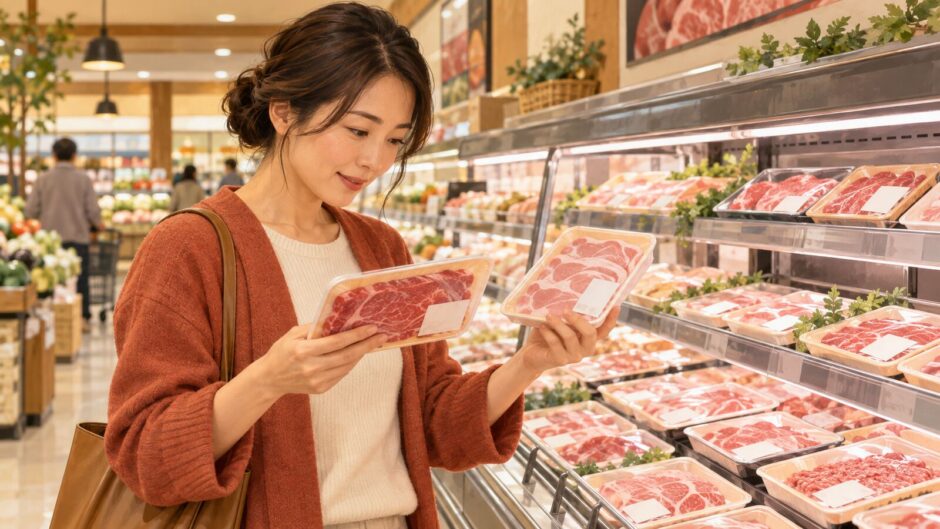

At a Japanese supermarket, a tray might say 国産豚ばら 焼肉用 and show both a 100g price and a larger total price. Read it in this order: animal and cut → origin → price per 100g and total weight → use-by date and storage instructions. That tells you what you are buying, how much the pack costs, and how to handle it once you get home.
Words to find on a meat package
| Japanese on the label | Reading | What it tells you |
|---|---|---|
| 牛肉 / 豚肉 / 鶏肉 | gyūniku / butaniku / toriniku | Beef / pork / chicken |
| 国産 / ○○県産 / ○○産 | kokusan / ○○-ken san / ○○ san | Domestic origin / from a named prefecture or place |
| もも / むね / ばら / ロース | momo / mune / bara / rōsu | Thigh or leg / breast (especially chicken) / belly or plate / loin (cut names vary by animal) |
| ひき肉 / こま切れ / 切り落とし | hikiniku / komagire / kiriotoshi | Ground meat / small pieces / sliced trimming pieces |
| 焼肉用 / しゃぶしゃぶ用 | yakiniku-yō / shabushabu-yō | Cut or prepared for grilling / for shabu-shabu; a suggested use, not a cut name |
| 解凍品 / 冷凍 | kaitō-hin / reitō | Previously frozen and thawed / frozen |
| 加熱用 / 要加熱 | kanetsu-yō / yō kanetsu | For cooking / must be heated |
| 100g当たり / 内容量 / 税込価格 | hyaku-guramu atari / naiyōryō / zeikomi kakaku | Per 100g / pack weight / tax-included price |
| 消費期限 / 保存方法 / 要冷蔵 | shōhi kigen / hozon hōhō / yō reizō | Use-by date / storage method / refrigeration required |
The National Meat Fair Trade Council’s 2025 packaged-meat labeling guide illustrates the items on a pack: meat type and cut, origin, 100g unit price, weight, selling price, date and storage method, plus a frozen or thawed indication where relevant. Exact layout differs between shops.
Read a sample label from left to right
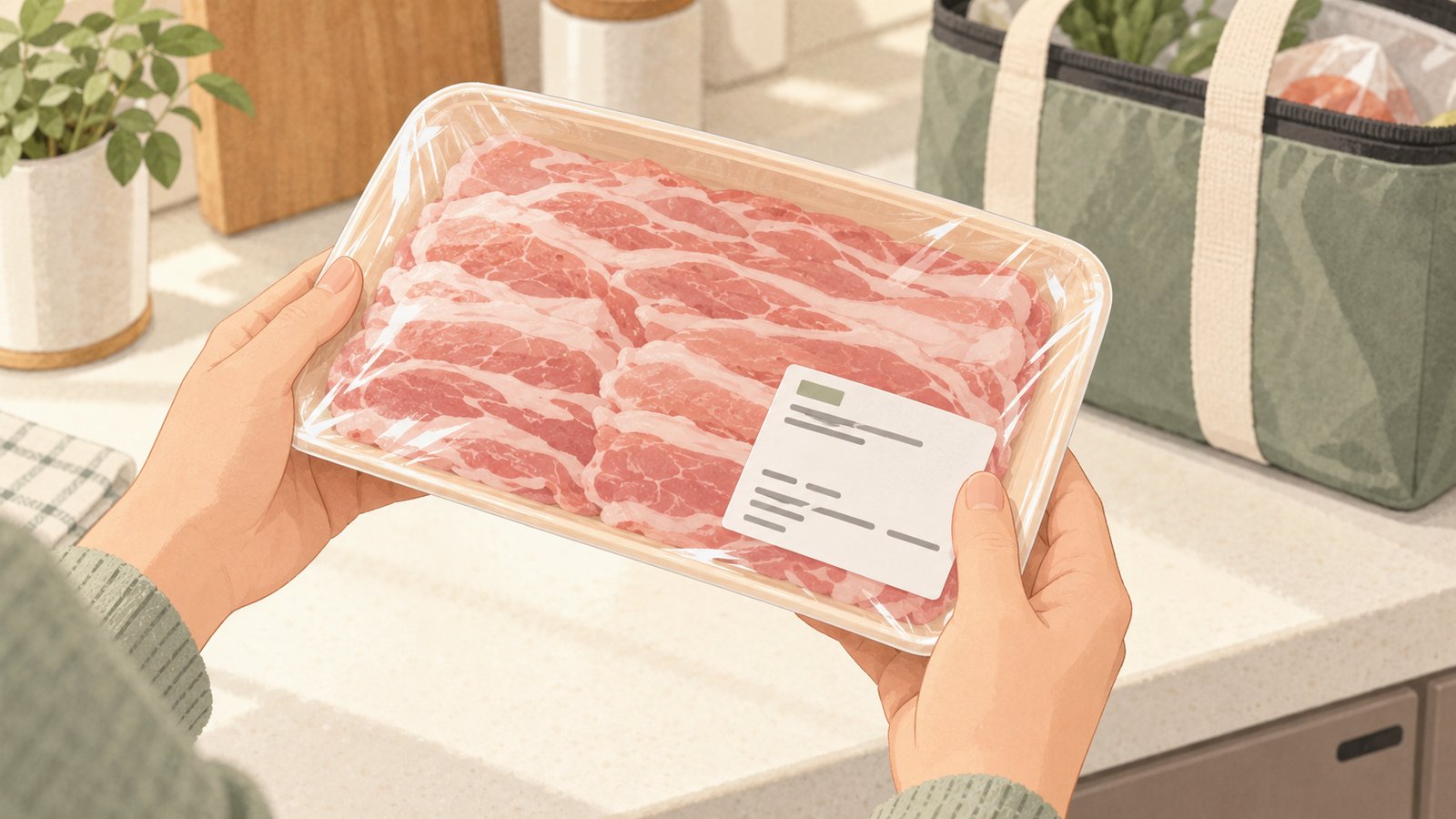
Imagine a tray marked 国産豚肉 ばら 焼肉用, 100g当たり 198円, 内容量 250g, 消費期限 9月30日, and 要冷蔵. It is domestically produced pork belly prepared for grilling. The 198 yen figure is a unit price; check the separately printed 販売価格 or 税込価格 for the amount charged for that particular pack. The date and storage wording must be read on the actual product. This example is illustrative, not a current store price or a recommended storage period.
If you are comparing packs of different sizes, the 100g price helps. Our Japanese supermarket price-label guide also explains tax-inclusive prices and discount stickers.
Origin and cut: two easy mix-ups
国産牛 (kokusan-gyū, “domestic beef”) and 和牛 (wagyū, “Wagyu”) do not mean the same thing. Domestic origin concerns where the animal was raised under the origin rule, while Wagyu refers to particular cattle breeds. The Ministry of Agriculture, Forestry and Fisheries explains this distinction. A prefecture name followed by 産 gives a more specific origin when shown; imported packs may identify a country instead. Check the label rather than assuming a Japanese-sounding brand name proves origin.
A cooking use such as 焼肉用 is also different from a cut. Look for ばら, もも or another cut alongside the use description. The meat industry’s guide to species and cut labels shows examples. In everyday shopping, 鶏もも (tori momo) is chicken thigh, 鶏むね (tori mune) is chicken breast, 豚ばら (buta bara) is pork belly, and 豚ひき肉 (buta hikiniku) is ground pork.
Before cooking: date, storage and heating
- Check 消費期限 and 保存方法 before buying. A use-by date assumes the stated storage conditions. For the difference from 賞味期限, see our Japanese food-date guide.
- Keep raw meat separate from foods that will be eaten without cooking, and refrigerate it promptly according to the package. If the product says 解凍品, it was previously frozen and thawed; do not mistake the word for an instruction to thaw it yourself.
- Cook meat thoroughly. Japan’s Ministry of Health, Labour and Welfare advises sufficient heating and avoiding cross-contamination at home. In particular, undercooked chicken can cause food poisoning; “fresh” does not mean safe to eat raw.
If a label is hard to read, ask 「これはどこの産地ですか?」 (Kore wa doko no sanchi desu ka?, “Where is this from?”) or 「これは加熱用ですか?」 (Kore wa kanetsu-yō desu ka?, “Is this for cooking?”). When handling a packaged, seasoned meat product rather than plain fresh meat, also check its ingredient and allergen panel; the labeling format may differ. Our allergen-label guide can help with that panel.
For help reading the compartment names at home, see our Japanese refrigerator labels guide. For another common grocery item, our egg carton label guide explains raw-use and cooking indications.
Keep shopping with confidence
For the full trip from basket to checkout, return to our grocery shopping guide. If you are choosing fish instead, compare the separate raw-eating and cooking indications in our seafood-label guide.