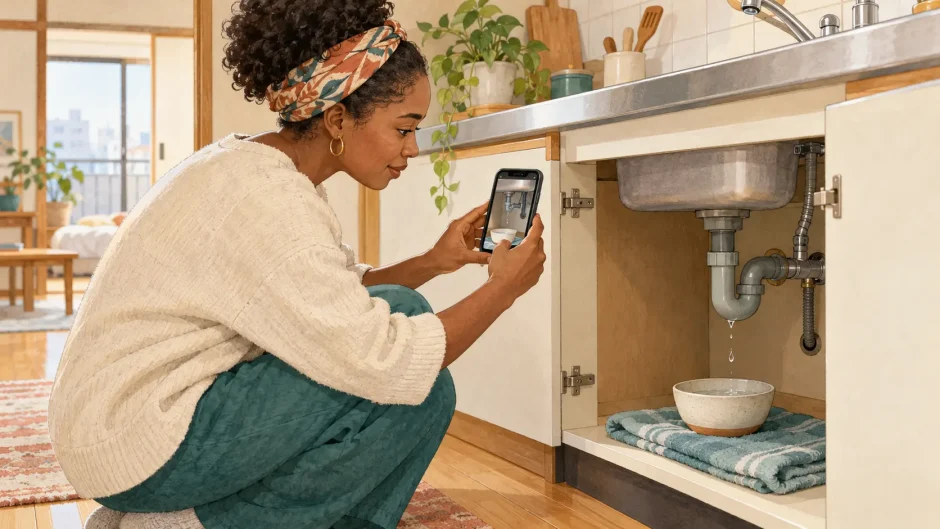

Your kitchen tap leaks, the built-in air conditioner stops, or the water heater shows an error. In a Japanese rental apartment, start by reporting the problem to the management company or landlord named in your lease. Describe what happened, when it started, and whether you can still use the fixture. Keep photos and your message. For an urgent leak or other immediate hazard, use the emergency contact in your contract promptly and follow any safety instructions supplied for the building.
Japanese words for reporting a problem
| Japanese | Reading | Meaning |
|---|---|---|
| 設備 | setsubi | Building fixture or equipment |
| 故障 | koshō | Breakdown or malfunction |
| 不具合 | fuguai | Problem; not working properly |
| 水漏れ | mizu more | Water leak |
| 給湯器 | kyūtōki | Water heater |
| エアコン | eakon | Air conditioner |
| 管理会社 | kanri gaisha | Property management company |
| 貸主・借主 | kashinushi; karinushi | Landlord; tenant |
| 修理・修繕 | shūri; shūzen | Repair; maintenance or restoration |
| 立ち会い | tachiai | Being present for an inspection or repair visit |
| 緊急連絡先 | kinkyū renrakusaki | Emergency contact |
| 費用負担 | hiyō futan | Who pays the cost |
What to do before arranging a repair
- Check for immediate danger. If water is spreading, protect yourself and your belongings, and contact the building’s emergency line. If you smell gas or see an electrical hazard, stop using the affected equipment and contact the relevant emergency service or utility as instructed by your provider. Do not attempt an unsafe repair.
- Find the right contact. Look in your lease, move-in information, management app, or building notice for 管理会社, 修繕受付, or 緊急連絡先. Use the verified contact rather than an unfamiliar number in an unsolicited message.
- Record the symptoms. Photograph the whole fixture and the problem, note the date and time, the model or error code if visible, and what happens when you use it. State whether the item was already present when you moved in. Do not reset or dismantle unfamiliar equipment just to produce a better description.
- Report it promptly. Give your building and room number, a short account of the problem, when it began, and a way to reach you. Ask what to do next and whether a technician will need access.
- Confirm the arrangement in writing. Before hiring a contractor yourself, ask who will order the work, whether you must be present, and how the cost will be handled. Keep the reply and any receipt.
Tokyo Metropolitan Government’s rental housing dispute prevention guide says that repairs during occupancy are generally performed by the landlord and that tenants should contact the designated party promptly when repairs are needed. The Ministry of Land, Infrastructure, Transport and Tourism (MLIT) illustrates the usual sequence as tenant contact, confirmation by the landlord or manager, then arrangement of a repair contractor in its rental housing case studies. Your lease and the cause of the damage still matter for cost allocation.
A message you can copy
件名:設備の不具合について([建物名・部屋番号])
管理会社ご担当者様
[建物名・部屋番号]の[氏名]です。[設備名]に不具合があり、ご連絡しました。
[日時]から[具体的な症状]という状態です。現在、[使用できる/使用できない]状態です。写真を添付します。
修理の手配方法と、立ち会いの要否を教えていただけますか。
連絡先:[電話番号]
よろしくお願いいたします。
In English: “I live in [building and room]. There is a problem with [fixture]. Since [date/time], [specific symptom]. I can/cannot use it. I have attached photos. Please tell me how the repair will be arranged and whether I need to be present.”
For a leak, write キッチンのシンク下から水漏れしています。 (“Water is leaking from under the kitchen sink.”) For a built-in air conditioner, write 備え付けのエアコンが冷えません。 (“The installed air conditioner is not cooling.”) Include an error code exactly as shown if there is one.
Who pays?
Do not assume that every broken item is either automatically free to repair or automatically your responsibility. The cause, whether the item belongs to the property, and the contract terms all matter. Normal aging and a tenant-caused breakage may be treated differently. Tokyo’s rental housing dispute prevention guidelines set out general examples for repairs and cost sharing. Ask for an explanation of the relevant lease clause and the proposed charge before agreeing to paid work.
If the equipment was broken when you arrived, your dated move-in records can help establish the timeline. See our move-in inspection checklist. If a dispute surfaces as you leave, see the move-out and deposit checklist.
If the reply is slow
Follow up using the contact method in your contract. Restate the date of your first report, the current effect on daily living, and when you can admit a repair worker. Save a record of calls and messages. For an unresolved dispute, a local consumer affairs or housing consultation service can explain available options; Tokyo provides English information on rental disputes.
This article explains a practical reporting process. It does not decide legal liability or authorize a particular repair. Follow your contract and the instructions of your utility or emergency service for the specific situation.