


How can you bring holidays into an adult English lesson in Japan? Use a holiday as a conversation prompt, not a script everyone must celebrate. Ask what the learner has seen or experienced, give a little context, and practise language they can use to describe a tradition, compare experiences, or ask a respectful question.
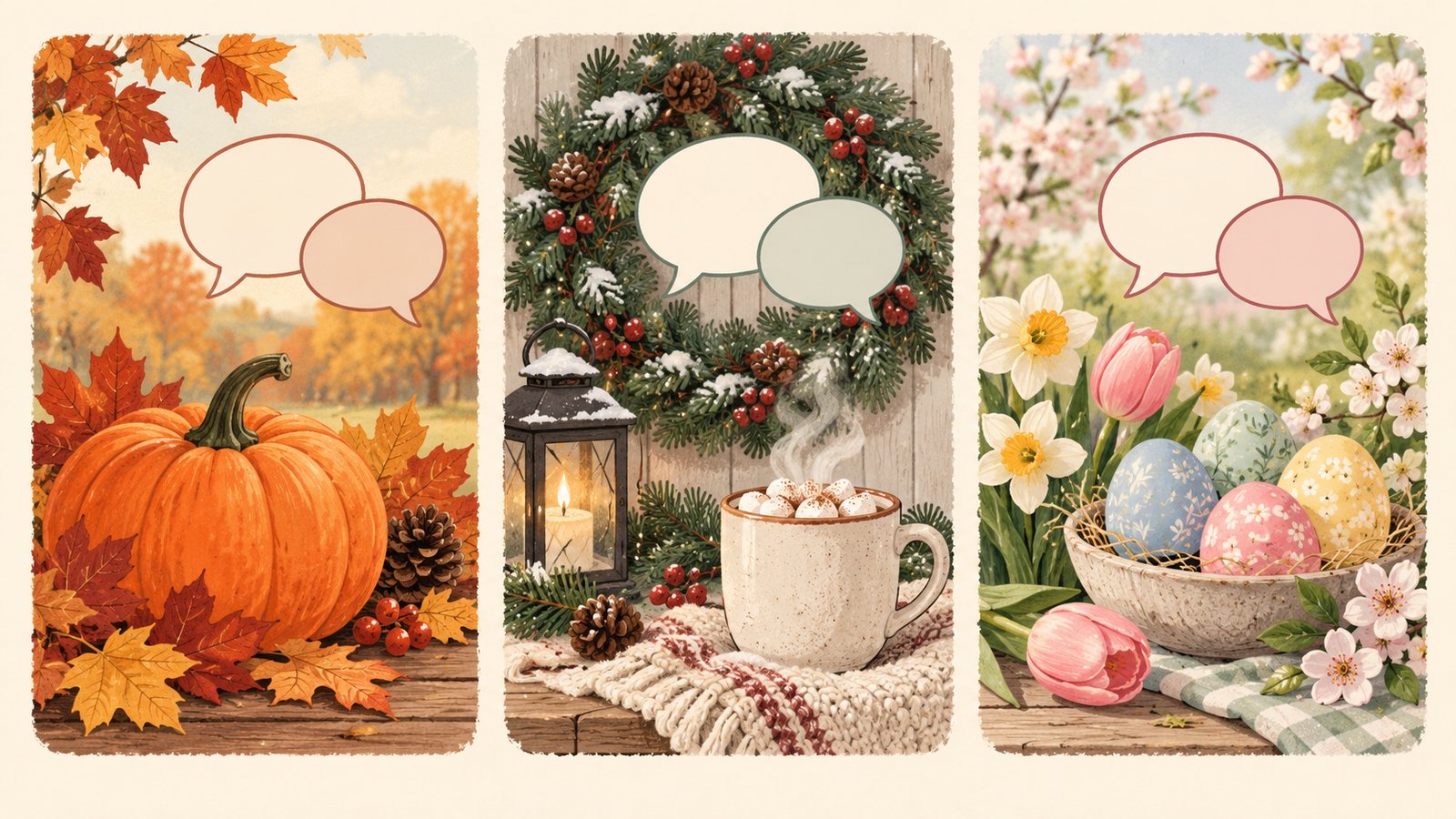
Halloween, Christmas, and Easter offer different images and stories. Your learner may know a lot, a little, or nothing about each one. Their interests matter more than your assumptions about their background.
Start with the learner, not the decorations
A picture card or one simple question is enough to open the topic: “Have you ever taken part in a Halloween event?” or “What comes to mind when you hear ‘Christmas’?” Let the answer shape the next few minutes. A learner who wants travel vocabulary may enjoy describing an event; another might prefer to compare family traditions or discuss how a holiday is represented in films.
Keep cultural claims specific. “In my family, we…” and “Some people in the United States…” are more accurate and more inviting than “Americans always…” The same applies to life in Japan. Ask about the learner’s own experience instead of treating one local custom as universal.
Halloween: describe a scene and a preference
Halloween gives learners concrete objects and actions to describe: costumes, pumpkins, decorations, parties, or a scene in a movie. You do not need to wear a costume or ask a learner to dress up. A photo can do the work.
Try these questions: “What is happening in this picture?” “Would you enjoy this kind of event?” “What would you wear if you chose a costume?”
Useful phrases: “I’ve seen it, but I haven’t taken part.” “I would rather watch than dress up.” “It looks fun, although crowded places aren’t for me.”
For a short activity, ask the learner to recommend a Halloween plan to two different friends: one loves parties; the other prefers a quiet evening. They practise tailoring a suggestion to a person rather than simply naming holiday words.
Christmas: explain what a tradition means to someone
Christmas can involve religious observance, family gatherings, food, gift-giving, work, or none of those things, depending on the person and place. Rather than asking whether a country celebrates it “properly,” explore what a particular tradition means to the speaker.
Try these questions: “Is there a seasonal meal or event you look forward to?” “How would you explain it to a visitor?” “What is different between your experience and a film you have seen?”
Useful phrases: “In my family, we usually…” “It depends on the household.” “The part I enjoy most is…” “I have not celebrated it myself, but I’m curious about…”
For a short activity, the learner describes a seasonal tradition in three sentences: what happens, who joins, and why it matters to them. The topic can be any tradition they choose. This keeps the language objective useful even if Christmas is not personally relevant.
Easter: ask about meaning as well as symbols
Eggs and spring colours are easy visual entry points, but Easter also has religious meaning for many people. If you introduce it, explain the distinction briefly and let the learner decide which aspect they want to discuss. Do not assume that a learner or teacher celebrates it.
Try these questions: “What do you think this picture represents?” “Have you heard of this holiday?” “How would you ask someone about a tradition without making assumptions?”
Useful phrases: “Could you tell me more about that?” “Does it have a special meaning for you?” “I know the name, but I’m not familiar with the tradition.”
A useful role-play is an exchange between two people who are curious about each other’s traditions. They ask, listen, and clarify; neither has to pretend to belong to a culture or faith that is not their own.
A 10-minute holiday conversation plan
- One minute: Show one photo and ask what the learner notices.
- Three minutes: Ask about their experience or a related interest. Offer a short explanation only if needed.
- Four minutes: Practise two useful phrases through a comparison, recommendation, or short story.
- Two minutes: Ask the learner to repeat their answer with one new phrase and note a question for next time.
Choose a goal that fits the lesson. A beginner may practise “I usually…” and “I have never…”; a more confident learner may compare traditions with “whereas” or soften a question with “Would you mind telling me…?” Follow your school’s lesson plan and any guidance on activities or gifts.
Keep the conversation open
If a learner is uninterested in a holiday, move to another seasonal topic: a trip, a favourite food, a day off, or a local event. You still practise the same language. Holidays work best when they give learners something they want to say, not when the teacher tries to recreate a celebration in the classroom.
Continue with four more holiday conversation activities, including Thanksgiving and Valentine’s Day.
For more classroom ideas, see our guides to free talk, adult one-to-one lessons, and improving your lessons.