


Want to improve a one-to-one English conversation lesson? Start with three habits you can practice immediately: make your prompts easy to follow, check what the learner understood, and explain a language point through something they actually want to say. These habits also make a teaching demonstration easier to observe and discuss.
This is a practical guide for teaching adults, including beginners. It builds on our broader guide to one-to-one lessons with adults by focusing on what an instructor can do in a single exchange.
1. Use short prompts, then give the learner time
Even when an instructor speaks clearly, a long set of instructions can be hard to hold in mind. State one task at a time and show an example if needed. Match your wording to the learner’s current level without speaking unnaturally or treating them like a child.
Instead of: “All right, I was thinking we could perhaps go ahead and talk about a memorable trip, and then maybe consider the reasons it was special…”
Try: “Tell me about a trip you remember. Where did you go?”
Pause after the question. If the learner needs help, offer a choice or an opening phrase: “I went to…” Then let them continue. An instructor’s ability to use silence productively often matters more than filling every gap with another explanation.
Try recording a practice prompt and listening back. Can a learner tell what to do after hearing it once? If not, shorten it. In a demo lesson, this makes the learner’s speaking time visible rather than allowing the instructor to dominate.
2. Check understanding through a response, not only “Do you understand?”
A learner may say yes to keep the conversation moving, yet still be unsure what to do. Ask a question that reveals their understanding without turning the lesson into a test. Invite them to choose, explain, or use the new phrase in their own situation.
- After modeling “I’d like to…,” ask: “What would you like to do this weekend?”
- After a travel phrase, ask: “Which question would you ask at the station?”
- After a correction, ask: “Can you tell me that story again with the new phrase?”
If the learner hesitates, change the support: give two options, write the phrase, or model another example. Notice whether the task is too large before assuming the learner lacks motivation. Communication also has different styles; eye contact, gesture, and facial expression are not universal measures of engagement. Listen to what the learner says and ask what helps them participate.
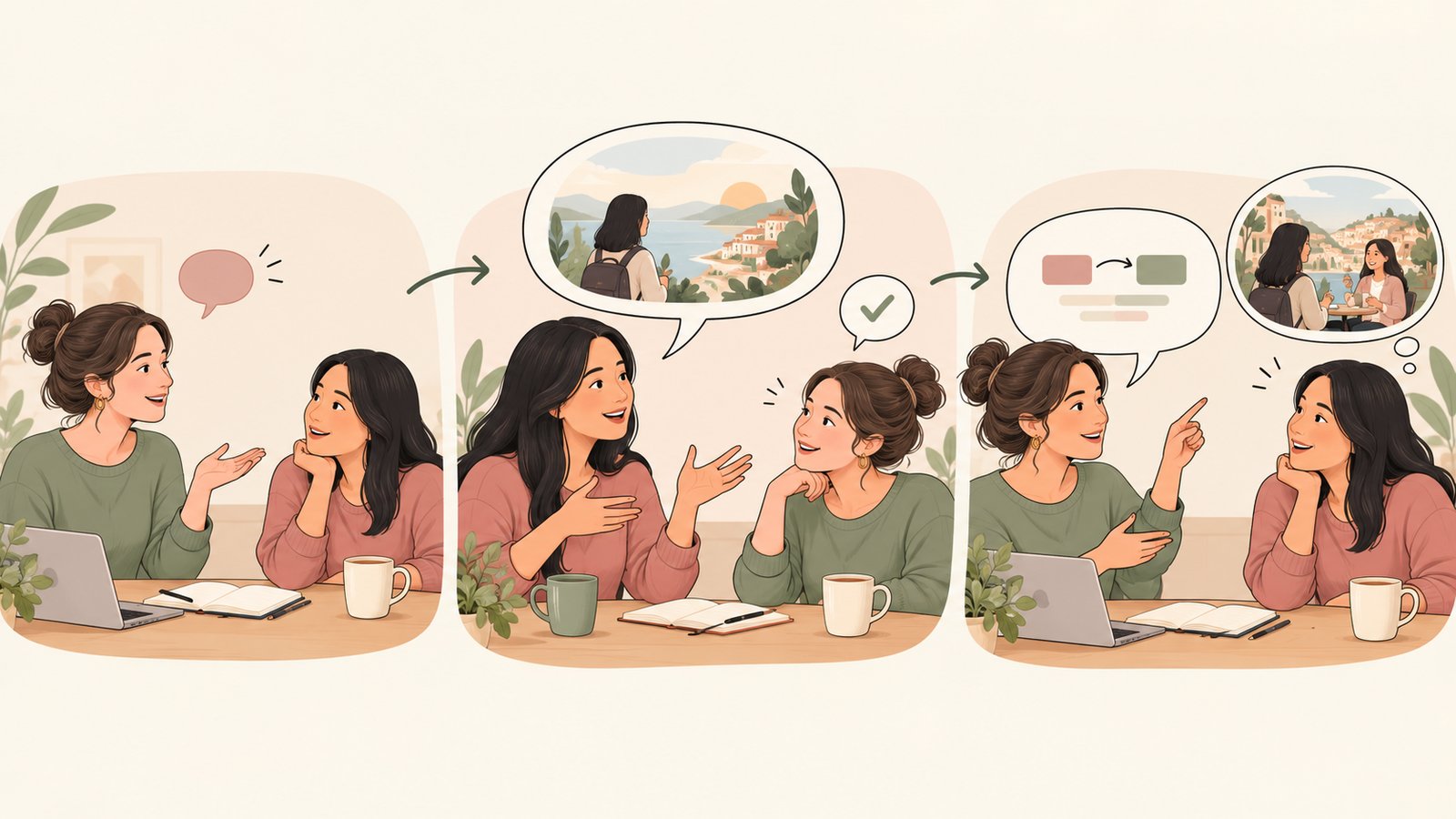
3. Explain grammar through the learner’s meaning
You do not need to deliver a full grammar lecture every time a learner makes an error. First find out what they want to say. Then give a short model and invite them to use it. Keep the explanation accurate, but choose the amount of detail the moment needs.
Suppose a learner says, “I have been to Kyoto last weekend.” If the intended time is a finished trip last weekend, you might respond: “You went to Kyoto last weekend. What did you do there?” After the story, briefly contrast “I went to Kyoto last weekend” with “I’ve been to Kyoto before.” The time phrase helps explain the choice.
If you are unsure about a grammatical point, do not improvise a confident rule. Say you will check and follow up. Preparation can include reviewing common verb forms and making a few examples that connect to the lesson topic. For a demo, choose one point you can explain simply and accurately.
The same approach works for vocabulary that sounds familiar but shifts in meaning. Our guide to challenge and candy in Japanese English shows how a follow-up question can uncover the intended meaning.
Put the three habits into a short practice cycle
- Before: Pick one speaking goal and prepare a simple opening question.
- During: Give a short prompt, wait for the learner, and check understanding with a small task.
- After: Note one phrase to revisit and one change you will make to your next prompt.
For example, with a learner who wants to talk about a weekend trip, you could ask where they went, follow with “What was your favorite part?”, and finish by practicing one past-tense sentence they can use again. That is a more concrete lesson goal than “talk for thirty minutes.” Manage the closing with our time management guide.
Small changes are easier to repeat
Choose one habit for your next lesson or practice session. Shorten a prompt, check understanding through a response, or connect one correction to the learner’s story. Observe the effect and adjust. Teaching improves through that cycle of listening and revision, not a fixed performance style.