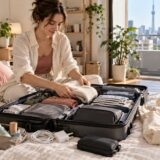


What should you wear to an English teaching interview or an eikaiwa (英会話) lesson in Japan? Follow the school’s current instructions first. If none are given, choose a clean, comfortable outfit that lets you move, sit, write, and speak naturally with learners. The exact standard varies by school, role, and setting.
This guide helps you choose an interview outfit, prepare for a teaching day, and ask about anything the job posting does not explain.
For an interview: start with the invitation
Read the invitation for a dress code, venue, and whether a demo lesson is included. A school may ask for formal business wear, business casual, or something else. If it says “business casual” without examples, a simple shirt or blouse with neat trousers or another comfortable professional option can be a starting point. You do not need to buy a new wardrobe before you know the employer’s expectations.
Think about the full visit. Can you walk from the station, sit comfortably during the interview, and stand or gesture during a demo? Shoes that fit and clothing that stays comfortable during a lesson matter more than a complicated outfit.
If the instruction is unclear, a short question is fine: “Is there a dress code for the interview and demonstration lesson?” Asking before the day is easier than guessing. For the teaching portion, our demo lesson guide covers lesson preparation.
For lessons: focus on function and the learner experience
A teaching outfit needs to work in the actual room. You may sit across from a learner, move to a board, handle materials, or travel between locations. Choose pieces that fit the school’s policy and let you do those tasks without constant adjustment.
- Fit and comfort: Try sitting, standing, and reaching for teaching materials.
- Footwear: Check the venue’s shoe rules and choose a pair suitable for the commute and room.
- Care: Keep clothes clean and in good repair; consider a layer for changing temperatures.
- Shared space: If you use fragrance, be mindful that a learner or coworker may be sensitive to strong scents.
These are practical checks, not a judgment about someone’s body, fashion, or cultural background. The employer’s stated policy should be specific enough for candidates to understand and apply.
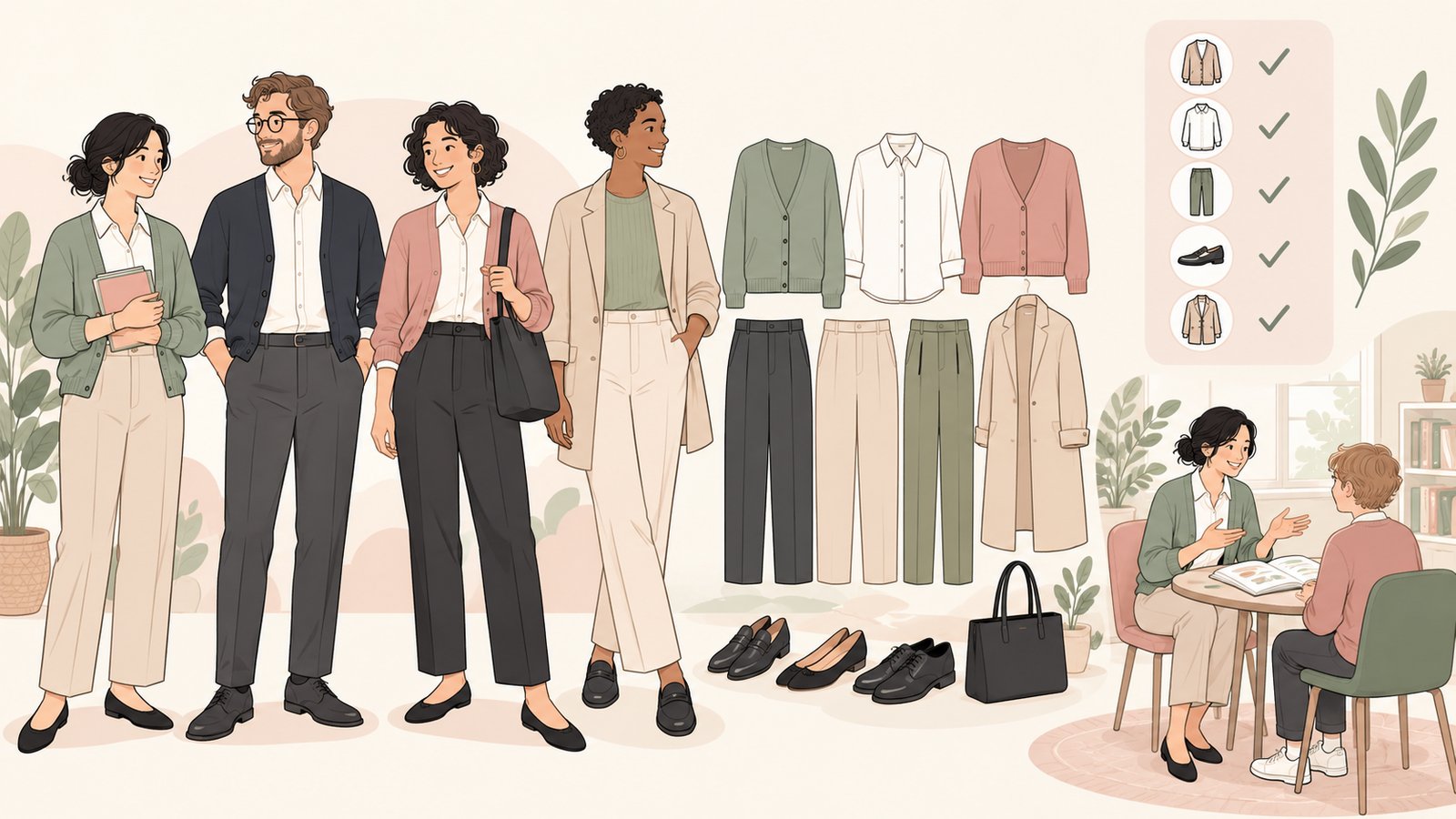
Ask about details without apologizing for them
Policies around visible tattoos, piercings, hair color, head coverings, religious dress, or other personal presentation can differ by workplace. Do not assume an old blog post states the current policy, and do not infer it from a photo of one employee. Ask for the written or current guidance if a detail affects you.
For example: “I wear a head covering. Could you share the current dress guidelines for instructors?” Or: “Are there any footwear requirements in the lesson room?” You can ask about practical needs or accommodations directly and discuss how the work can be done in the specific setting. A clear answer before accepting an offer helps both sides plan.
Business casual is a range, not a universal uniform
The phrase “business casual” can mean different things in different schools. One workplace may expect a jacket; another may be comfortable with a cardigan. A useful way to interpret it is to ask for examples of acceptable teaching outfits and any items that are restricted. Check whether the interview standard differs from the everyday lesson standard.
Do not rely on one anecdote about a candidate’s appearance or a former staff member’s preferences. The relevant information is the current role, the school’s documented guidance, and what helps you teach effectively.
Quick checklist before your first visit
- Check the invitation or posting for a dress code and the day’s activities.
- Choose clean, comfortable clothes and shoes suited to the venue and commute.
- Try a few teaching movements in the outfit.
- Ask about any rule or personal need that the instructions do not address.
- After joining, use the school’s current written guidance for regular lessons.
What you wear should support the teaching, not distract you from it. If you are comparing schools more broadly, our guide to choosing an eikaiwa suggests other questions about lessons, support, and working conditions.