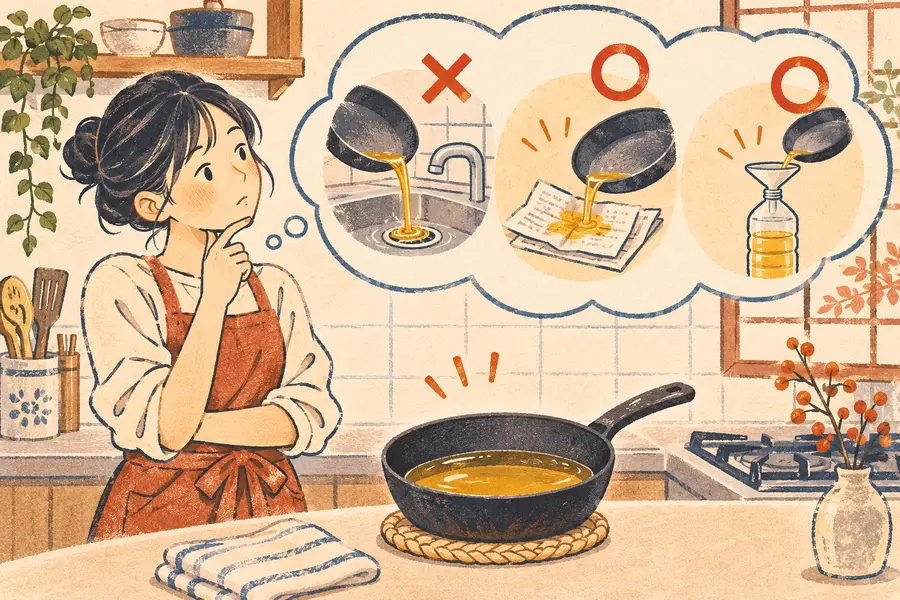

After frying at home, turn off the heat and check your municipality’s instructions for 使用済み食用油 (used cooking oil). Your address determines whether to take it to a collection point or prepare it for household waste. Let liquid oil cool completely before transferring it into a container or absorbing it. Keep it out of the sink.
Find the right entry in your local waste guide
| Japanese | What to look for |
|---|---|
| 使用済てんぷら油・廃食用油 | Used cooking oil. This may be the entry even if you cooked something other than tempura. |
| 回収拠点 | A collection point. Check its hours, the oils it accepts, and the required container. |
| 紙や布にしみこませる | Absorb the oil into paper or cloth when your local instructions specify that method. |
| 固める | Solidify it. Follow the directions for the product you use and the local disposal rule. |
Check which of these routes applies to your address
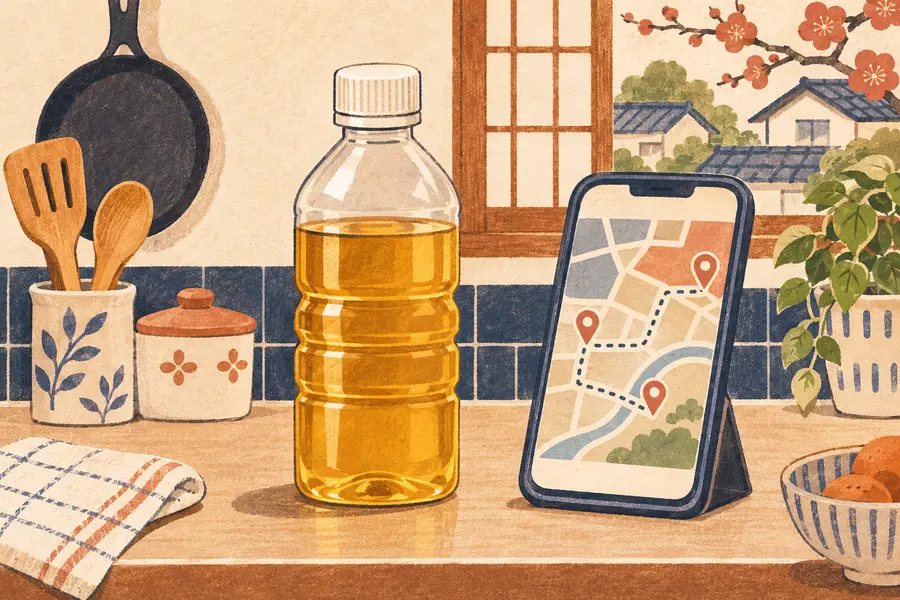
Collection points. Kyoto City lists used cooking oil collection sites. Some accept the oil in a plastic drink bottle, while others use a collection tank. Check the site’s instructions before choosing the container or bringing the oil. A bottle accepted at a dedicated oil collection point does not belong in the ordinary PET recycling bin while it contains oil. Kyoto City’s cooking oil collection guide
Household waste. Yokohama’s burnable waste instructions say to absorb tempura oil into cloth or paper or solidify it before setting it out. Use the bag and collection schedule prescribed for your address. If you buy a solidifier, check the package for the amount of oil it treats and when to add it. Yokohama City’s burnable waste guide
Ask where to take the oil
家庭で使った食用油はどこに持って行けばよいですか。容器の指定はありますか。
English translation. Where should I take used household cooking oil? Is there a required container?
For grocery labels and choosing an oil for the recipe, see our Japanese cooking oil labels guide. For waste categories and collection schedules, see how to find your local garbage rules.