


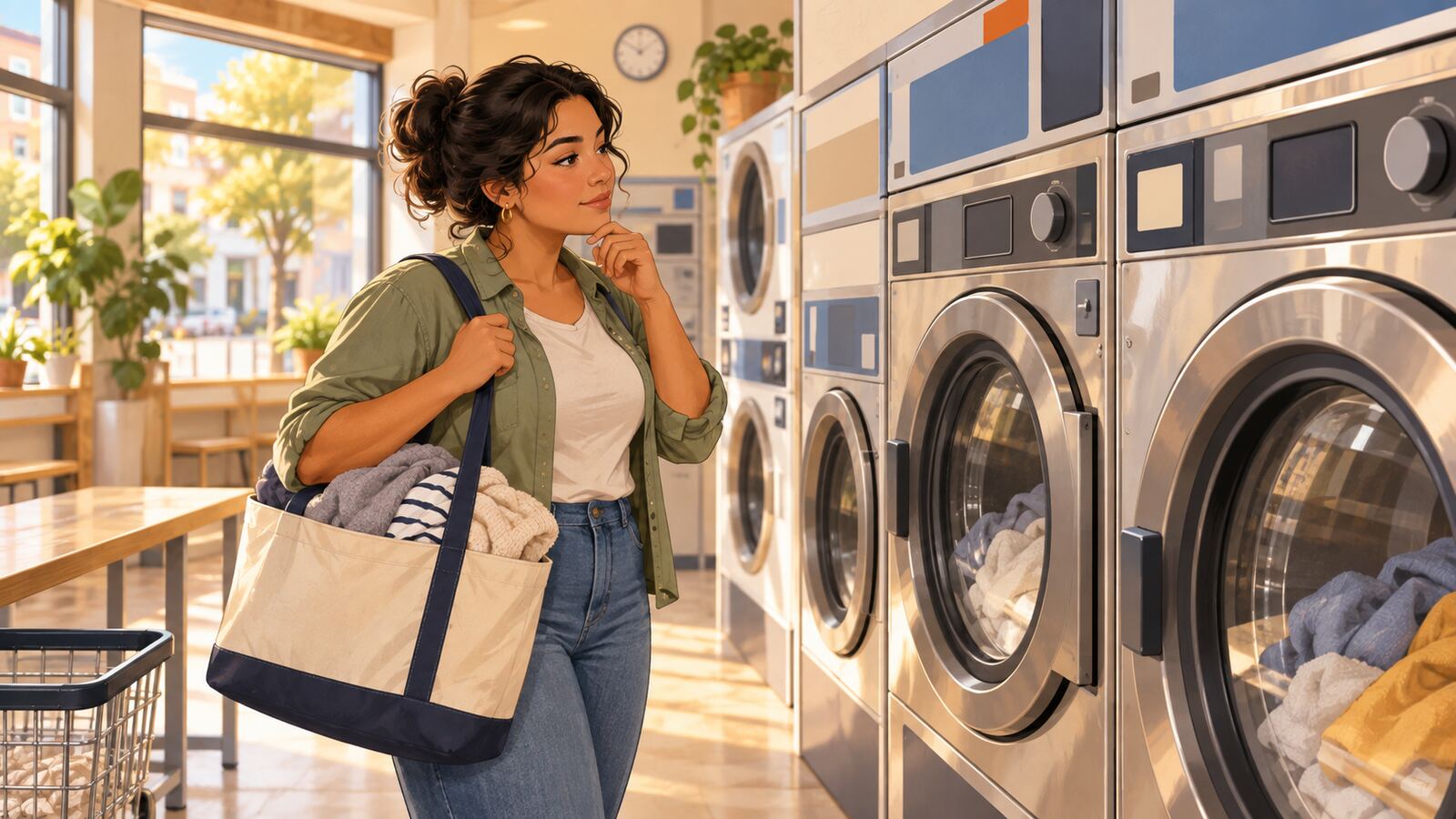
You have a bag of laundry, but the machine offers 洗濯乾燥, 洗濯のみ, and 乾燥のみ. Choose by what you need: wash and dry in one machine, wash without drying, or dry already washed clothes. Check the instructions and price on that particular machine before paying; the controls and payment order differ by model and shop.
Words to find on the machine
| Japanese | Reading | Meaning |
|---|---|---|
| 洗濯乾燥 | sentaku kansō | Wash and dry in one cycle |
| 洗濯のみ | sentaku nomi | Wash only |
| 乾燥のみ | kansō nomi | Dry only |
| ドラム洗浄 | doramu senjō | Clean the empty drum |
| 洗剤自動投入 | senzai jidō tōnyū | Detergent dispensed automatically |
| 料金 | ryōkin | Price |
| 投入口 | tōnyūkō | Insertion slot, often for coins |
| 両替機 | ryōgaeki | Change machine |
| 上段/下段 | jōdan / gedan | Upper / lower machine |
| 低温/標準/高温 | teion / hyōjun / kōon | Low / standard / high temperature |
| 残り時間/終了 | nokori jikan / shūryō | Time remaining / finished |
| ドアロック解除 | doa rokku kaijo | Door lock released |
Before you put in money
- Match the machine to your load. A washer, combined washer-dryer, and stand-alone dryer do different jobs. Check the posted capacity, especially the drying capacity of a combined machine. Do not pack the drum tightly.
- Check each garment’s care label. Some fabrics cannot be tumble dried; low-temperature drying may still be inappropriate if the label rules out tumble drying altogether. Our Japanese clothing care label guide helps with the symbols.
- Read the detergent notice. Some machines dispense detergent and softener automatically. Others require you to supply them. Follow the notice on the selected machine instead of adding detergent out of habit. See our detergent guide if you need to buy some.
- Check payment. Read the displayed price and accepted coins, notes, cards, or app options. A nearby 両替機 may make change, but do not assume every shop has one.
Using a washer-dryer
Check that the drum is empty. If the machine offers a pre-cycle ドラム洗浄, follow its posted directions while the drum is empty; on some models you do this before loading. Add laundry within the stated capacity and close the door. Select 洗濯乾燥 for both steps or 洗濯のみ if you plan to air dry or move the load to a separate dryer. Read the selected course and price on the display, then pay as the machine instructs. Some machines begin automatically when payment is complete; others have a start control. Wait for 終了 and, where shown, ドアロック解除 before opening the door.
Using a dryer only
Put clean, washed items into an empty dryer without exceeding its posted limit, and close the door. Check whether the controls and coin slot belong to the 上段 or 下段 drum. Choose any temperature setting with the garment labels in mind, follow the machine’s payment and start instructions, and remove the load when the cycle ends. If clothes are still damp, check the shop’s instructions for adding time. Do not put items with materials or fittings that the dryer or their care labels prohibit inside.
When the screen or door is confusing
Machine sequences are not universal. AQUA’s guide to one washer-dryer model, for example, describes an empty-drum cleaning step, a course-dependent price, automatic detergent dispensing, and a door that unlocks after the cycle. WASHHOUSE’s instructions describe its own payment and start sequence. Follow the directions beside the machine you are using. If an error appears or the door stays locked, note the machine number and use the shop’s posted contact number; do not force it open.
Useful phrases: この機械は洗剤が自動で入りますか? (Kono kikai wa senzai ga jidō de hairimasu ka? — Does this machine add detergent automatically?) 乾燥だけできますか? (Kansō dake dekimasu ka? — Can I dry only?) 機械が止まりました。 (Kikai ga tomarimashita. — The machine stopped.)
If you are comparing these controls with a machine at home, see our Japanese washing machine buttons guide.