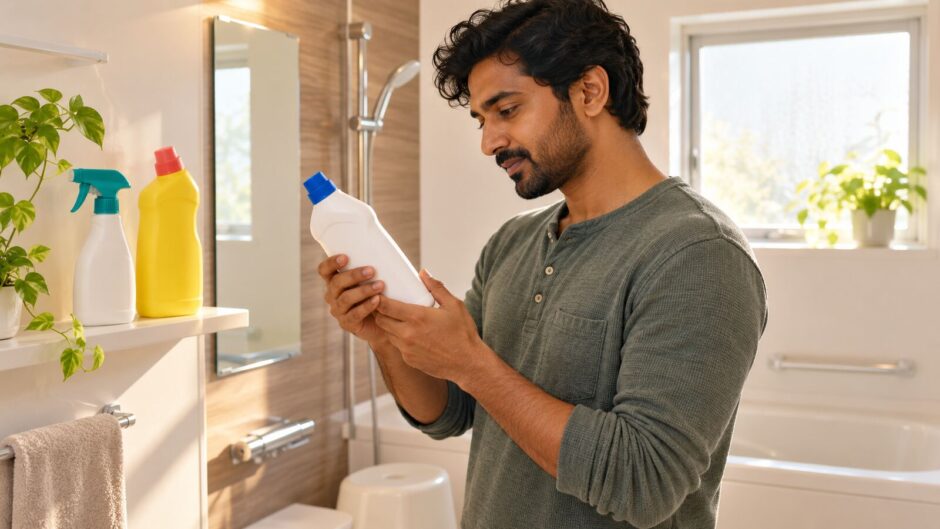

You are choosing a bathroom or kitchen cleaner in Japan and see まぜるな危険 on the bottle. It means “Do not mix: danger.” Check whether the product is marked 塩素系 (chlorine-based) or 酸性タイプ (acidic type). These must not mix: the combination can release harmful chlorine gas. Read the product’s own directions before using it, including on a surface where another cleaner may remain.
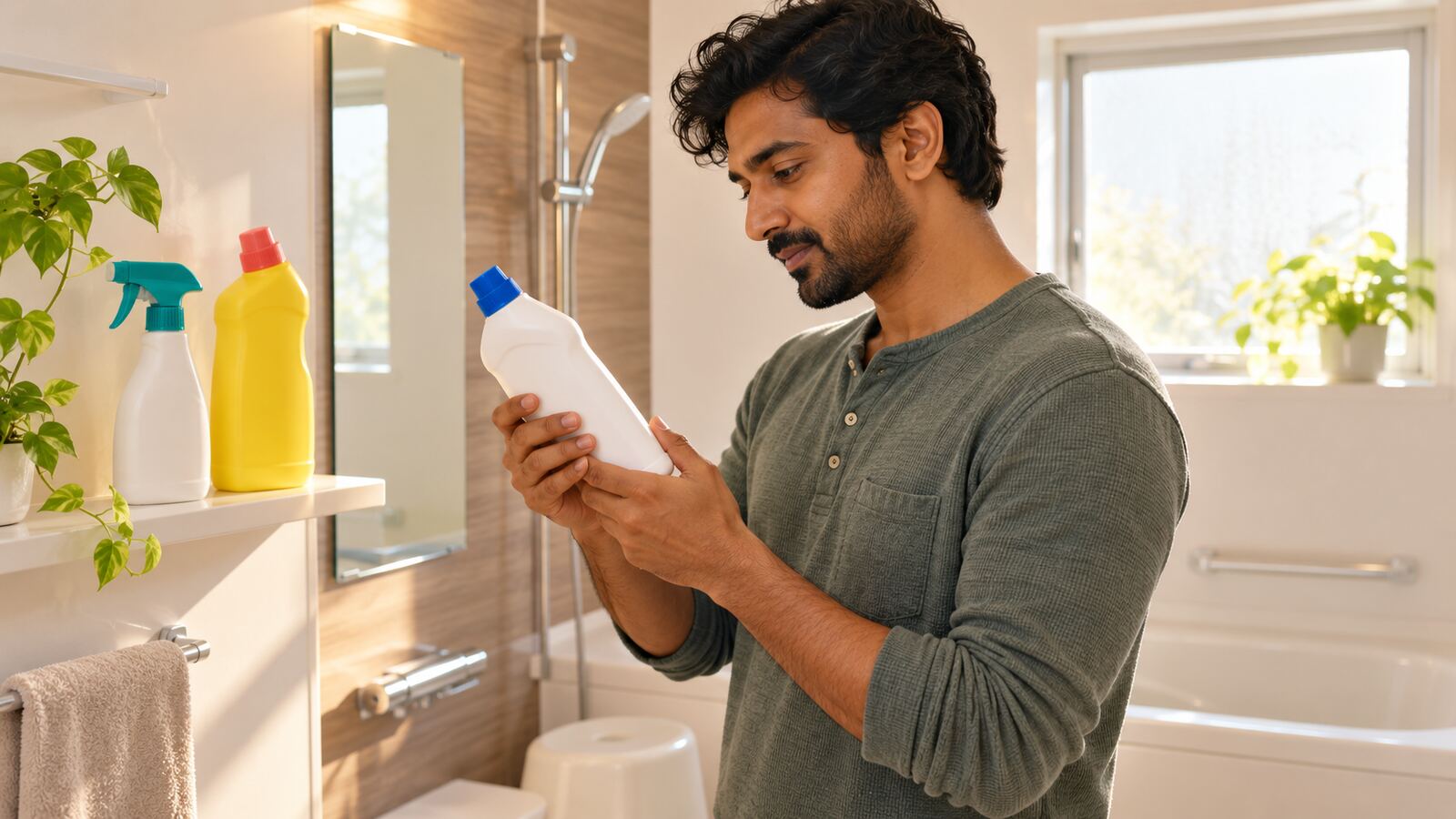
Warning words on a Japanese cleaner
| Japanese | Reading | What to do |
|---|---|---|
| まぜるな危険 | mazeru na kiken | Do not mix: danger. Check the product type and warning before use. |
| 塩素系 | enso-kei | Chlorine-based. Keep it separate from acidic products and other chemicals as directed. |
| 酸性タイプ | sansei taipu | Acidic type. Do not use it together with a chlorine-based cleaner. |
| 酸素系 | sanso-kei | Oxygen-based. This is a different term from 酸性 (acidic); still follow its own label and do not improvise mixtures. |
| 用途 | yōto | Intended use or surface. |
| 使い方 / 使用方法 | tsukaikata / shiyō hōhō | Directions for use. |
| 使用量の目安 | shiyōryō no meyasu | Suggested amount to use. |
| 使用上の注意 | shiyō-jō no chūi | Precautions; read before opening. |
| 換気する / ゴム手袋を着用 | kanki suru / gomu tebukuro o chakuyō | Ventilate / wear rubber gloves. |
| 洗い流す / 目に入った場合 | arainagasu / me ni haitta baai | Rinse off / if it gets in your eyes. |
The Consumer Affairs Agency’s guide to household cleaner labels shows the prominent “まぜるな 危険” warning and the separate 塩素系 and 酸性タイプ indications on applicable products. It also explains label fields such as intended use, recommended amount, and precautions. The warning’s presence is a serious signal; the absence of those words is not permission to mix products.
A safe way to read the bottle before cleaning
- Choose the intended surface. Look for 浴室用 (bathroom), トイレ用 (toilet), 台所用 (kitchen), or another use on the product. Do not assume every household cleaner works on every material.
- Find the warning on the front, then read the back. Check 塩素系, 酸性タイプ, まぜるな危険, 使用方法, 使用量の目安, and 使用上の注意. Follow that exact product’s contact time, dilution, rinse, ventilation, and protective-equipment instructions; they vary by formula.
- Use one product at a time. Do not combine liquids in a bottle, bucket, drain, or on the same surface. Be especially careful if a different cleaner, vinegar, or alcohol may already be there. The manufacturer Kao warns that chlorine-based products can react with acidic cleaners and certain other substances.
- Rinse and finish as the label directs. The Japan Household Cleaning Products Association warns against applying an acidic cleaner over a chlorine-based cleaner that has not been washed away. If you cannot tell what is already in a drain or on a surface, stop and check the product instructions before adding anything.
Examples at home
Bathroom: You have used a mold remover labeled 塩素系. Do not immediately follow it with an acidic scale remover on the same surface. Finish the first product’s directions, including rinsing, and do not combine products.
Kitchen: A bottle of chlorine-based bleach is next to dish soap and vinegar. Keep products in their original containers and check the labels before cleaning a sink or drain. “Natural” vinegar is still acidic; the product name or smell is not a reliable mixing guide.
Laundry: A laundry product may also carry まぜるな危険. Our Japanese laundry-detergent guide covers the labels on clothing products. Do not transfer a bathroom-cleaner rule to a specific laundry combination without checking both packages.
If products have accidentally mixed
If you notice a strong irritating smell or feel unwell, leave the area immediately; do not lean over the container or stay to investigate. Kao’s safety answer advises leaving the area if chlorine gas is generated. Seek urgent medical help if you have symptoms, and tell responders which products were involved. Follow the emergency instructions printed on the actual bottles.
In a store you can ask 「これは塩素系ですか?」 (Kore wa enso-kei desu ka?, “Is this chlorine-based?”) or 「この洗剤の使用上の注意を教えてください。」 (Kono senzai no shiyō-jō no chūi o oshiete kudasai., “Could you explain this cleaner’s precautions?”). A few seconds spent reading the warning matters more than the color or shape of the bottle.